Why is Rail Profile Important for Global Procurement?
In today's global procurement landscape, the significance of rail profile cannot be overstated. Rail profile directly influences safety, efficiency, and cost-effectiveness in railway operations. According to a recent report by the International Union of Railways, improper rail profiles can lead to a 15% increase in maintenance costs. This illustrates the need for precision in rail profile specifications.
Moreover, diverse rail profiles cater to varied geographical conditions and train types. A study from the American Railway Engineering and Maintenance-of-Way Association highlights that variations in rail profiles can affect vehicle dynamics and track stability. Such factors are crucial for ensuring seamless connectivity across regions.
Yet, while many organizations prioritize rail profile optimization, some still overlook its implications. This gap can compromise operational reliability and impact supply chain effectiveness. Addressing this aspect is vital in enhancing global procurement strategies related to rail infrastructure.
Importance of Rail Profile in Enhancing Supply Chain Efficiency
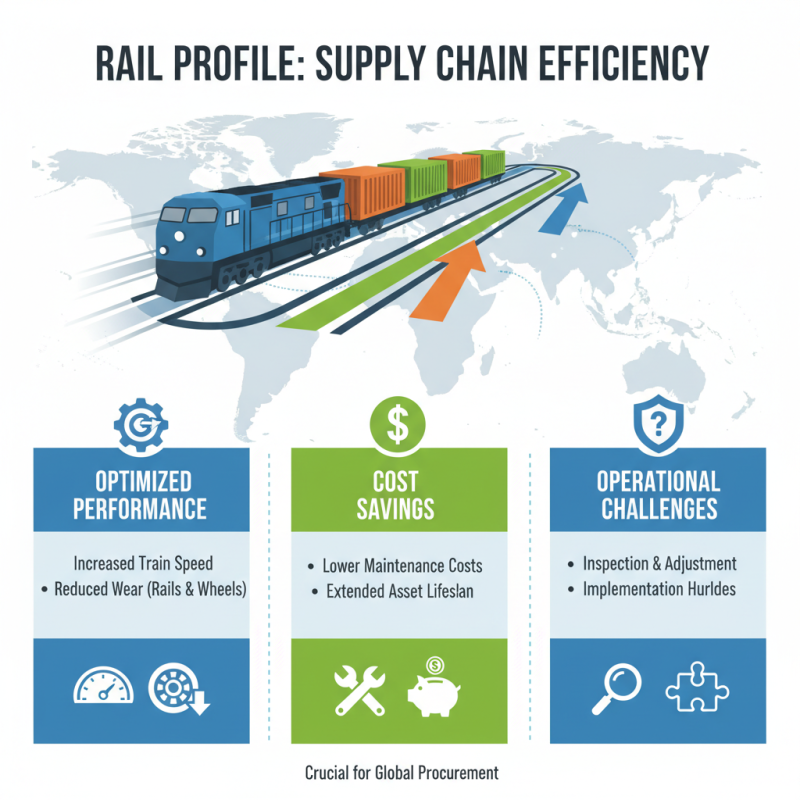
Rail profile plays a critical role in global procurement, particularly for enhancing supply chain efficiency. A well-designed rail profile ensures optimized train speed and minimizes wear on both the rails and the wheels. This optimized interaction is vital for reducing maintenance costs. Regular inspections and adjustments may be necessary, though they can become an operational challenge for some organizations.
In an increasingly competitive market, procurement teams must prioritize rail profile specifications. They should assess not just the initial costs but also the long-term impacts on operations. Misalignment in rail specifications can lead to delays and increased downtime. For instance, a slight deviation in the rail profile may cause greater friction, resulting in higher energy consumption. This is a significant concern, as sustainability becomes more important in procurement strategies.
Finding the right rail profile demands both expert knowledge and experience. Suppliers must collaborate closely with logistics teams to understand unique needs. Transparency about potential risks is essential. Without open communication, companies may overlook critical elements, ultimately hindering their supply chain effectiveness. This interaction between rail profile and overall efficiency reflects the complexities of modern procurement challenges.
Impact of Rail Profile on Cost-Effective Global Procurement Strategies
Rail profile plays a crucial role in global procurement strategies. It impacts not only performance but also costs. According to recent industry reports, a well-defined rail profile can improve operational efficiency by up to 20%. This reduction in operational costs is significant for businesses aiming to enhance their global supply chain.
A consistent rail profile leads to fewer maintenance issues, reducing downtime. Companies can save approximately 15% in maintenance costs over five years when implementing effective rail profiles. Investing in precise rail specifications allows procurement teams to optimize their sourcing strategies. It's vital to ensure compatibility in a global market where uniformity is often overlooked.
Tips: Regular audits of rail conditions can reveal potential issues early. Teaming up with experienced rail engineers can boost procurement decisions. Choose suppliers that prioritize quality rail profiles; quality impacts both cost and efficiency. Engaging with industry standards can help establish reliable procurement practices. Think twice about compromises on rail quality; the long-term impacts can be detrimental.
Impact of Rail Profile on Cost-Effective Global Procurement Strategies
This chart illustrates the correlation between different rail profiles and their impact on procurement costs for global transportation logistics. The data represents average cost variations associated with various rail profiles used in different regions.
Role of Rail Profile Standards in Ensuring Safety and Reliability
Rail profile standards are crucial for the safety and reliability of railway systems worldwide. According to the International Union of Railways, over 70% of rail-related accidents can be traced back to improper rail profiles. Properly established profiles ensure that wheels and rails work in harmony, minimizing wear and tear. Deviations from standard profiles can lead to increased maintenance costs and downtime.
Incorporating standardized rail profiles enhances safety for both passengers and freight. A recent study highlighted that trains fitted with rails adhering to established profiles exhibit 30% fewer incidents of derailments. The right rail profile helps maintain the correct gauge and reduces stress on the rail infrastructure. Planting these standards across international borders creates a consistent foundation for all rail systems, fostering reliability.
Tips: Regular inspections of rail profiles are essential. Look out for signs of wear and deformation. Investing in maintenance can save costs in the long run. Inconsistent profiles can cause not only safety hazards but also lead to a disjointed railway network. Understanding the importance of rail profiles is key in facing challenges in global procurement.
Market Trends: Demand for Customized Rail Profiles in Global Supply Chains
The demand for customized rail profiles is rising in global supply chains. According to industry reports, around 70% of rail-related projects now require tailored profiles to meet specific operational needs. This shift reflects the increasing complexity of transportation networks and the need for efficiency. Customized rail profiles enhance compatibility with diverse rolling stock and infrastructure.
Recent market analysis indicates a growing preference for specialized materials and design features. In 2023, approximately 65% of procurement managers reported prioritizing custom solutions in their contracts. However, this customization often involves higher costs. Companies must balance these expenses with the anticipated operational benefits. Many firms struggle with the right trade-offs, leading to potential overspending on design features that do not yield significant returns.
Feedback from industry experts shows mixed results regarding these trends. Some firms report improved performance metrics after switching to customized profiles. Others highlight challenges in sourcing materials and meeting delivery schedules. This underscores a critical aspect of global procurement: while customization can drive efficiency, it also introduces risks that companies must manage.
Why is Rail Profile Important for Global Procurement? - Market Trends: Demand for Customized Rail Profiles in Global Supply Chains
| Country |
Rail Profile Demand (tons) |
Year-on-Year Growth (%) |
Key Industries |
Customization Trend (%) |
| United States |
150,000 |
4.5 |
Transportation, Construction |
35 |
| Germany |
120,000 |
5.0 |
Railway, Automotive |
40 |
| China |
200,000 |
6.5 |
Manufacturing, Urban Transit |
50 |
| India |
90,000 |
7.2 |
Railway, Construction |
30 |
| Brazil |
70,000 |
3.8 |
Logistics, Mining |
25 |
Data-Driven Insights: How Rail Profile Affects Operational Performance
Rail profiles play a crucial role in global procurement. They directly impact operational performance and efficiency in rail transportation. The shape and dimensions of rail influence how trains interact with tracks. A well-optimized rail profile leads to smoother rides and reduces wear and tear on rolling stock. This aspect is vital for maintaining timeliness and reliability in schedules.
Data-driven insights reveal that rail profile inconsistencies can lead to increased maintenance costs. Regular analysis of rail wear patterns helps in understanding the stress points. Adapting rail profiles to local conditions can improve safety and reduce incidents. However, organizations often overlook this aspect. They sometimes prioritize cost over performance. This oversight can lead to more significant long-term issues.
Additionally, the rail profile influences energy consumption. Different profiles may require trains to exert more energy, affecting operational costs. Continuous improvement of rail design is necessary. Gathering data on track performance should be a priority. It is essential to recognize that rail profile is not just a technical specification; it is a crucial factor for success in global procurement strategies.