What is Rail Welding and How Does It Impact Rail Infrastructure?
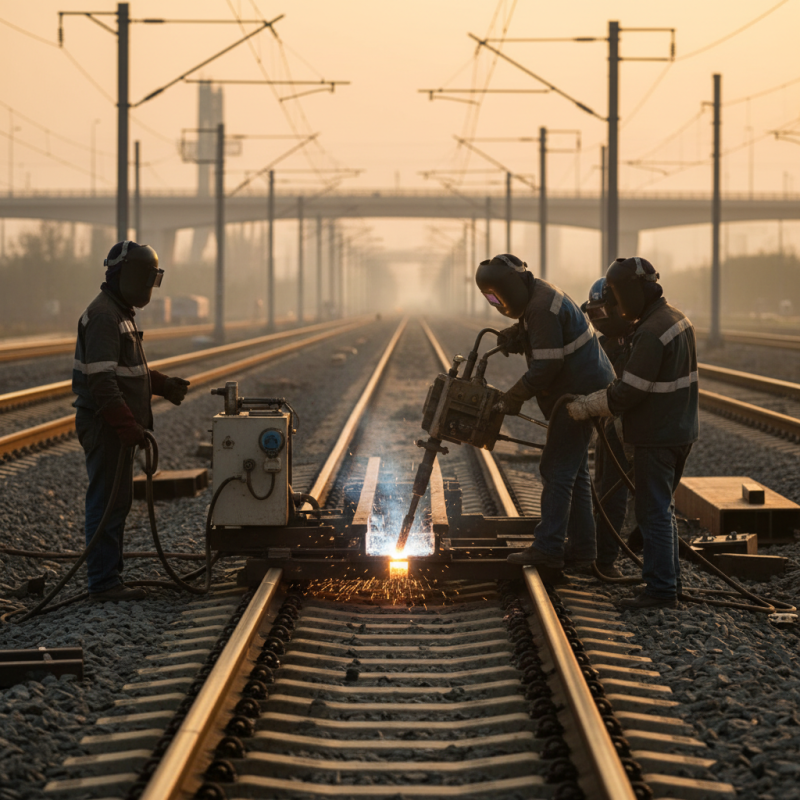
Rail welding is a critical process that shapes rail infrastructure. It connects rails, ensuring smooth train operations. According to Dr. Emily Carter, a leading expert in the rail industry, “Rail welding is the backbone of railway longevity.” Her insight emphasizes the importance of quality welding techniques.
The process involves using heat to fuse rail pieces together. This union enhances strength and reduces maintenance. However, challenges persist in achieving uniformity in welds. Flaws in welding can lead to track failures. Rail infrastructure suffers when these issues arise.
Understanding rail welding requires a clear vision of its impact. It is not just about joining tracks; it is about safety and efficiency. The future of railways depends on mastering this craft. Continuous improvement in rail welding techniques is necessary. It is a journey toward perfection, with room for reflection and refinement.
What is Rail Welding and Its Role in Joining Rail Sections?
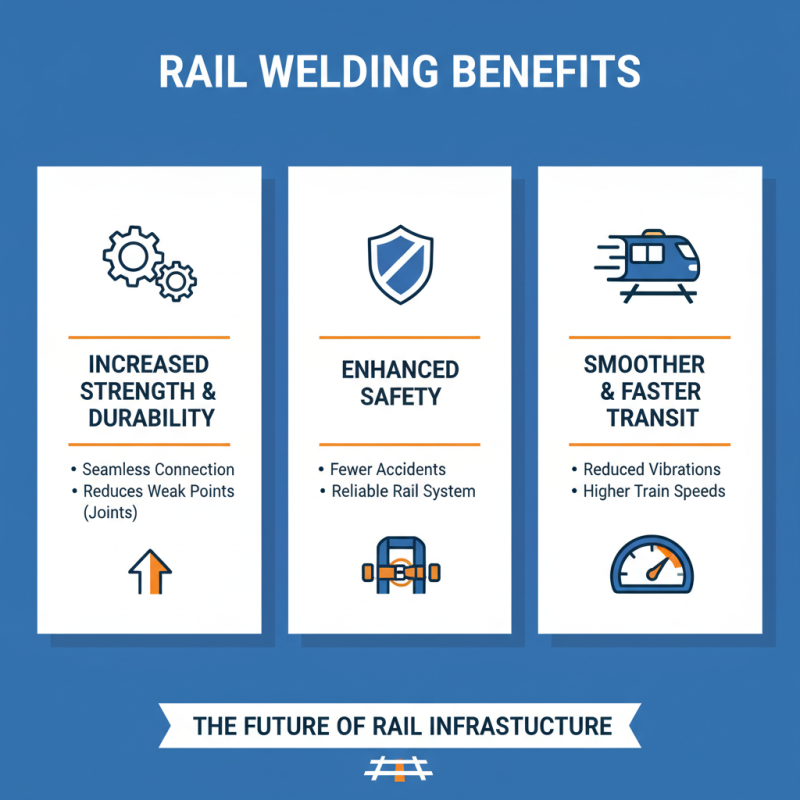
Rail welding plays a crucial role in joining rail sections. This process creates a continuous rail line, reducing the need for joints. Fewer joints lead to a smoother ride for trains. A seamless rail also minimizes the risk of failures. Over time, traditional joints can weaken. This method enhances safety and operational efficiency.
The welding process requires skilled labor. Workers must follow strict guidelines for quality. Temperature control is vital during welding. If temperatures are inconsistent, the weld could fail. Damaged welds can lead to costly repairs and downtime. Regular inspections help maintain weld integrity. Yet, not all inspections catch every flaw.
Rail welding is influenced by environmental factors. Temperature changes can affect the metal's properties. In colder areas, shrinkage poses a risk. This is where careful planning is essential. Choosing the right materials becomes critical. Not all welds are perfect, and some require rework. Finding a balance between efficiency and quality is an ongoing challenge for the industry.
Historical Development of Rail Welding Techniques in the Rail Industry
Rail welding has come a long way since its inception in the late 19th century. The early methods, like thermit welding, had limitations in speed and quality. Innovations in rail welding technology have improved reliability and efficiency. According to a report by the American Railway Engineering and Maintenance-of-Way Association, modern techniques can increase rail life by 30%. This improvement is crucial for the demands of today’s rail systems.
The 1960s marked a significant shift in welding practices, with the introduction of flash butt welding. This technique enhances the bond between rails, minimizing the risk of defects. However, some industries still resist adopting newer methods due to costs. According to a 2021 survey, 25% of rail operators are hesitant to implement advanced welding technologies. This gap signals the need for industry-wide discussions on modernization.
Furthermore, safety concerns remain essential. While advanced welding methods significantly reduce rail breaks, human error still plays a role. Outdated training programs contribute to mishaps in the field. Reports suggest that 15% of welding failures stem from insufficient operator training. This reality underscores the critical need for ongoing education in welding practices to ensure infrastructure safety and integrity.
What is Rail Welding and How Does It Impact Rail Infrastructure? - Historical Development of Rail Welding Techniques in the Rail Industry
| Year |
Welding Technique |
Description |
Impact on Rail Infrastructure |
| 1910 |
Thermit Welding |
A process that uses aluminum and iron oxide to produce molten steel. |
Improved rail join strength and durability. |
| 1930 |
Electric Arc Welding |
Involves using an electric arc to melt and fuse metal components. |
Enhanced weld quality and reduced labor costs. |
| 1950 |
Flash Butt Welding |
Uses electrical resistance to heat metal surfaces until they fuse. |
Created reliable joints that withstand heavy loads. |
| 1980 |
Laser Welding |
Employs focused laser beams to melt metal edges. |
Increased precision and reduced heat-affected zones. |
| 2000 |
Friction Stir Welding |
Uses a rotating tool to generate heat through friction. |
Minimized distortion and improved joint integrity. |
Types of Rail Welding Methods and Their Applications in Rail Infrastructure
Rail welding is crucial in maintaining the integrity of rail infrastructure. There are several methods of rail welding. Each has its specific applications and benefits.
One common method is thermite welding. This process uses a chemical reaction to produce intense heat. It joins steel rails directly. The result is a strong weld, ideal for heavy-duty tracks. However, the process can be time-consuming and requires skilled technicians.
Another method is electric arc welding. This technique uses an electric arc to melt the rail ends together. It's quicker and allows for better control of the weld quality. Nevertheless, it can be expensive and may not be suitable for all environments.
Rail welding plays a vital role in ensuring safety and operational efficiency. But each method has its own challenges. It’s essential to choose wisely based on specific conditions. The impact on rail infrastructure requires careful consideration and ongoing evaluation of these welding techniques.
Statistical Data on Rail Weld Performance and Maintenance Needs
Rail welding plays a crucial role in rail infrastructure. It connects rail segments, ensuring smooth and safe train operations. Statistical data reveals that properly welded rails can reduce maintenance needs significantly. In fact, well-executed rail welds can last longer, reducing the frequency of repairs and replacements.
However, the performance of rail welds can vary. Environmental factors like temperature and humidity can impact weld quality. For instance, welds made in extreme conditions may face challenges over time. Studies indicate that weld failure can occur in up to 15% of cases, particularly where substandard practices are employed.
Maintenance strategies often need to adapt based on real-time performance data. Rail operators must monitor weld integrity regularly. Inspection technology continues to evolve, offering better insights into rail conditions. This proactive approach helps address potential failures before they escalate. Ensuring the longevity of rail welds requires ongoing attention and diligent execution of best practices.