Why Rail Welding is Essential for Modern Transportation Infrastructure?
Rail welding is a crucial process in modern transportation infrastructure. It ensures the integrity and safety of rail networks that support millions of passengers and tons of freight daily. In 2020, the global rail welding market was valued at approximately $150 million. This figure is projected to grow, as more countries invest in high-speed rail and expand their transit systems.
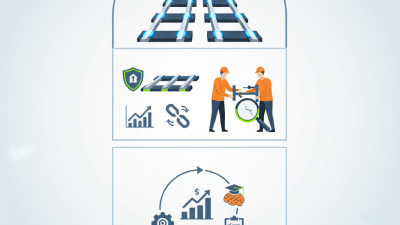
Innovative technologies in rail welding enhance operational efficiency. Automated welding techniques minimize human error and improve joint quality. Reports indicate that proper welding techniques can reduce maintenance costs by up to 30%. However, challenges exist in training skilled labor and maintaining equipment. Aging infrastructure may hinder effective welding practices, leading to potential safety risks.
Ultimately, rail welding is indispensable for maintaining effective transit systems. As cities modernize and grow, the demand for stronger, longer-lasting rail solutions increases. Addressing current limitations in technology and training will be vital to ensuring the future reliability of rail networks. The evolution of rail welding will significantly impact the transportation landscape worldwide.
Importance of Rail Welding in Rail Transportation Systems
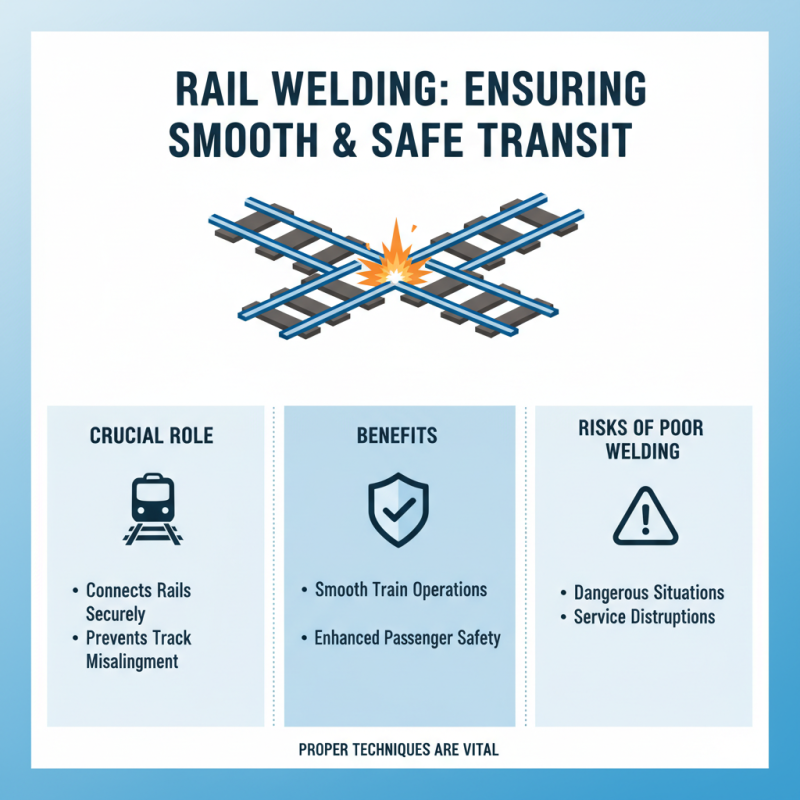
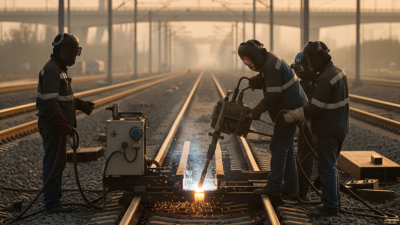
Rail welding plays a crucial role in modern rail transportation systems. It connects rails securely, ensuring trains run smoothly. A solid connection prevents track misalignment and enhances passenger safety. Poorly welded rails can lead to dangerous situations. Thus, proper welding techniques are vital.
Investing in high-quality rail welding can save costs over time. Regular inspections are necessary. This helps identify weak welds early. Operators should train staff on new techniques and materials. Not all welding methods are equal. Some may require re-evaluation to enhance safety and efficiency.
Tips for effective rail welding include:
1. Ensure the surface is clean before welding.
2. Regularly check equipment for wear.
3. Invest in training for new methods.
Careful attention to these factors can make a significant difference. Rail welding is not just a task; it’s an essential investment in safety and reliability. Think about what could go wrong. Seeking continual improvement is key in this industry.
Key Techniques and Technologies in Rail Welding
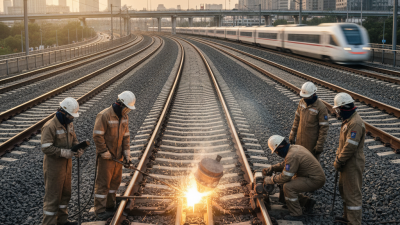
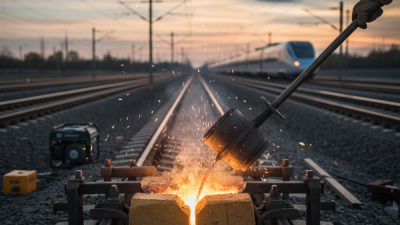
Rail welding plays a crucial role in maintaining modern transportation infrastructure. The precision and reliability it offers are vital for safe rail systems. There are several key techniques that enhance rail welding processes. Among them, thermite welding stands out. This method produces strong, durable joints for heavy loads. Data shows that this technique can reduce rail surface defects by nearly 80%.
Another technique involves electric flash-butting welding. This method is efficient and produces less heat-affected zones. Reports indicate that it can improve welding speed by 30%. However, challenges persist. For instance, proper training for welders remains essential. The quality of welds can heavily depend on the operator's skill.
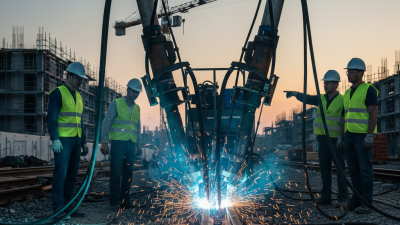
Moreover, advancements in technology are continually changing the field. Automated welding machines are becoming more common. They promise consistency and higher productivity. Still, the initial investment can be a barrier for some. These technologies require a delicate balance of cost and effectiveness. Improvement in rail welding is ongoing, pushing for enhanced safety and reliability in transit systems.
Benefits of Rail Welding for Safety and Durability
Rail welding plays a crucial role in enhancing safety and durability in modern transportation systems. The welded joints form continuous tracks, minimizing the risk of derailments. Each weld is meticulously crafted to withstand heavy loads and adverse weather events. A single weak point can lead to catastrophic failures, so precision is key in the welding process.
Furthermore, welded rail tracks require less maintenance compared to traditional bolted tracks. Fewer joints mean fewer places for potential issues to arise. However, imperfections in the weld can lead to longer-term problems. Regular inspections are essential to ensure that the welding meets safety standards. The need for continuous monitoring highlights a challenge in balancing cost and quality in rail infrastructure.
Durability also enhances operational efficiency. With fewer disruptions, trains can run on time, reducing delays. However, reliance on welded rails might create complacency. Regular assessments are vital to maintain safety. Investing in training welders and using advanced technology could improve quality control. This is crucial as the demand for rail transport continues to grow globally.
Economic Impact of Efficient Rail Welding Practices
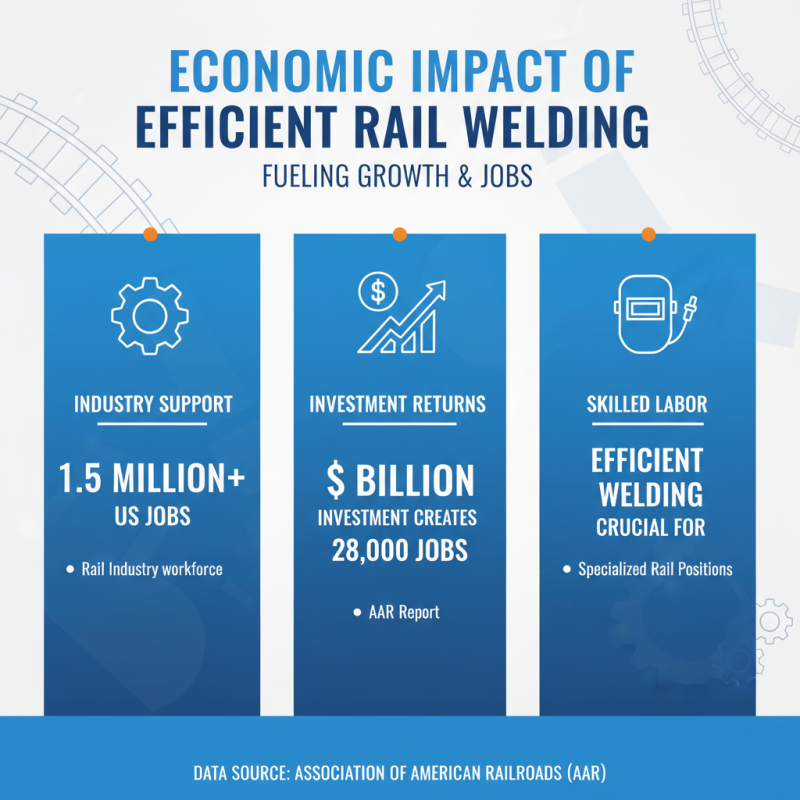
Efficient rail welding practices significantly impact the economy. The rail industry supports over 1.5 million jobs in the United States. According to a report by the Association of American Railroads, every $1 billion invested in rail creates about 28,000 jobs. This includes skilled positions that focus on rail welding.
Moreover, effective rail welding improves safety and reduces maintenance costs. A study showed that rail defects can lead to derailments, costing the industry millions. Rail systems that use advanced welding techniques experience a 20% drop in maintenance-related expenses. This highlights the importance of investing in modern welding technology.
However, challenges remain in the welding process. Not all operators are trained in the latest methods, leading to inconsistencies. Additionally, the environmental impact of welding materials is not fully addressed. As the rail sector evolves, it's crucial to reflect on these shortcomings. Investing in skilled training and sustainable practices can enhance both safety and economic benefits.
Future Trends in Rail Welding for Sustainable Infrastructure
The future of rail welding is crucial for sustainable infrastructure. As urban areas grow, we need efficient transportation solutions. Innovative welding techniques can enhance rail integrity, making it safer and more durable.
Heliocentric welding is emerging, using solar energy in the process. This can reduce carbon footprints significantly, aligning with global sustainability goals. However, challenges remain. The technology requires substantial investment and skilled labor. Not all regions have access to these resources.
Another trend is automated welding machines. They promise precision and speed. Yet, there's a human element that automation cannot replace. Skilled welders will still be essential for monitoring and adjustments. Striking the right balance between technology and human expertise will shape the future of rail welding.