What is Rail Welding Technology and Why is it Important?
Rail Welding Technology is a critical component in modern rail infrastructure. It involves the process of joining rail tracks to ensure safety and efficiency. Properly executed welds can extend the lifespan of the tracks and improve overall performance.
The significance of Rail Welding Technology cannot be overstated. Welded joints provide a continuous path for trains, reducing the risk of derailments. Skilled technicians are essential for achieving high-quality welds. The technology evolves constantly, so ongoing training is crucial for workers.
However, not all welding techniques achieve the same results. Inconsistencies may arise from various factors, including material quality and environmental conditions. This underscores the importance of rigorous quality control in the welding process. Investing in Rail Welding Technology not only boosts safety but also enhances the longevity of rail systems.
What is Rail Welding Technology?
Rail welding technology is a crucial aspect of railway infrastructure. It involves joining rail segments to create a continuous track. This process enhances the structural integrity of the rails, improving overall safety. Continuous welded rail reduces the number of joints, leading to a smoother ride for trains.
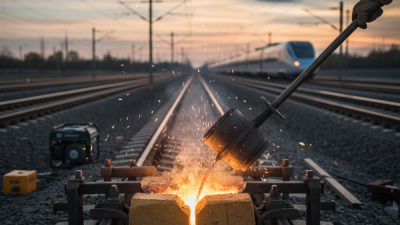
The most common methods include thermite welding and flash-butt welding. Thermite welding uses a chemical reaction to produce intense heat. This heat melts metal and fuses rails together. Flash-butt welding, on the other hand, uses electrical currents to generate heat. Both techniques require skilled professionals to ensure quality. However, there are challenges. Equipment failure or improper technique can lead to weak welds.
The importance of rail welding lies in its impact on maintenance and cost efficiency. Fewer joints mean lower maintenance costs and reduced disruption to service. Yet, there’s always room for improvement in welding techniques. Ongoing training and research help address existing challenges. This focus on advancement is key to the future of rail systems.
The Historical Development of Rail Welding Techniques
Rail welding technology has evolved significantly over the years. It began in the late 19th century with manual welding techniques. These methods were tedious and prone to failure. The 20th century brought increased demand for durability and efficiency in railway construction. This spurred the development of advanced methods, such as thermite welding in the 1930s. According to a recent industry report, rail failures due to poor welds account for 25% of all railway accidents, emphasizing the need for precision.
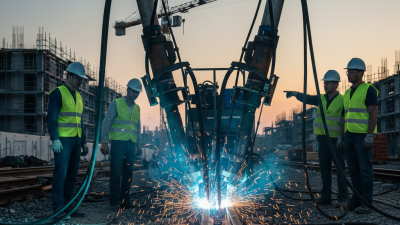
By the 1970s, further innovation led to flash butt welding and laser welding. These methods provided stronger and more reliable joints. Today, automated welding machines are becoming standard. These machines improve consistency and reduce human error. Data indicates that using automated methods can increase productivity by up to 40%.
Tips: When evaluating welding technology, consider its historical effectiveness. Understanding past failures can enhance future designs. Always prioritize quality over speed to prevent costly repairs. Remember, even advanced techniques require skilled operators. Continuous training is essential for optimal performance.
What is Rail Welding Technology and Why is it Important? - The Historical Development of Rail Welding Techniques
| Year |
Welding Technique |
Description |
Importance |
| 1930s |
Oxy-Acetylene Welding |
Utilizes a flame produced by burning oxygen and acetylene. |
Early methods of joining rails with flexibility and adaptability. |
| 1960s |
Electric Arc Welding |
Involves the formation of an electrical arc between an electrode and rail. |
Improved efficiency and strength of rail joints. |
| 1970s |
Flash Butt Welding |
Joins metals by creating a weld zone through localized heating. |
High quality and consistent welds without the need for fillers. |
| 1990s |
Thermite Welding |
Uses a chemical reaction to produce molten metal for welding. |
Great for heavy-duty rail joints in harsh environments. |
| 2000s |
Laser Welding |
Employs laser beams for precision welding of rails. |
Highly efficient with minimal thermal distortion. |
Key Methods and Processes in Rail Welding
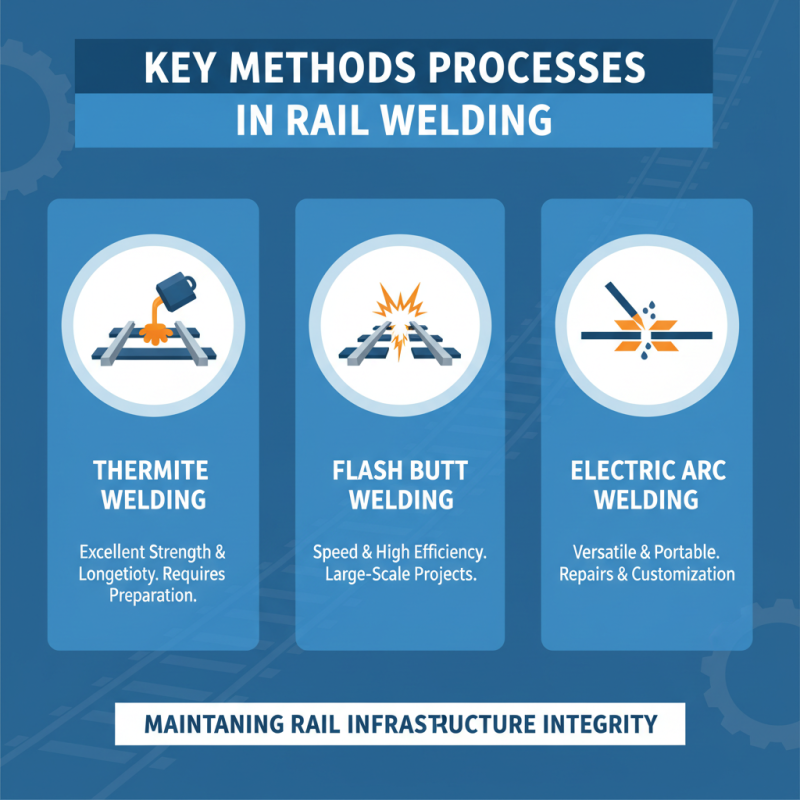
Rail welding technology is crucial in maintaining the integrity of railway infrastructure. Key methods encompass thermite welding, flash butt welding, and electric arc welding. Each method has unique strengths. For instance, thermite welding provides excellent strength and longevity, yet it requires substantial preparation. In contrast, flash butt welding offers speed and high efficiency, making it favorable for large-scale projects.
Data from the International Union of Railways reveals that well-executed rail welding improves line reliability by up to 30%. This enhancement is essential for safety, as cracks or defects can lead to derailments. However, not all welding techniques are foolproof. Improper execution can lead to weak joints, affecting the entire rail network.
Additionally, regular maintenance and monitoring are vital. Surveys indicate that 70% of rail failures relate to welding defects. Addressing these issues is paramount. Advanced training programs for welders can reduce risks substantially. Yet, the challenge remains in implementing consistent quality control across various sites. Balancing innovation and reliability is an ongoing process in the rail industry.
Significance of Rail Welding for Safety and Durability
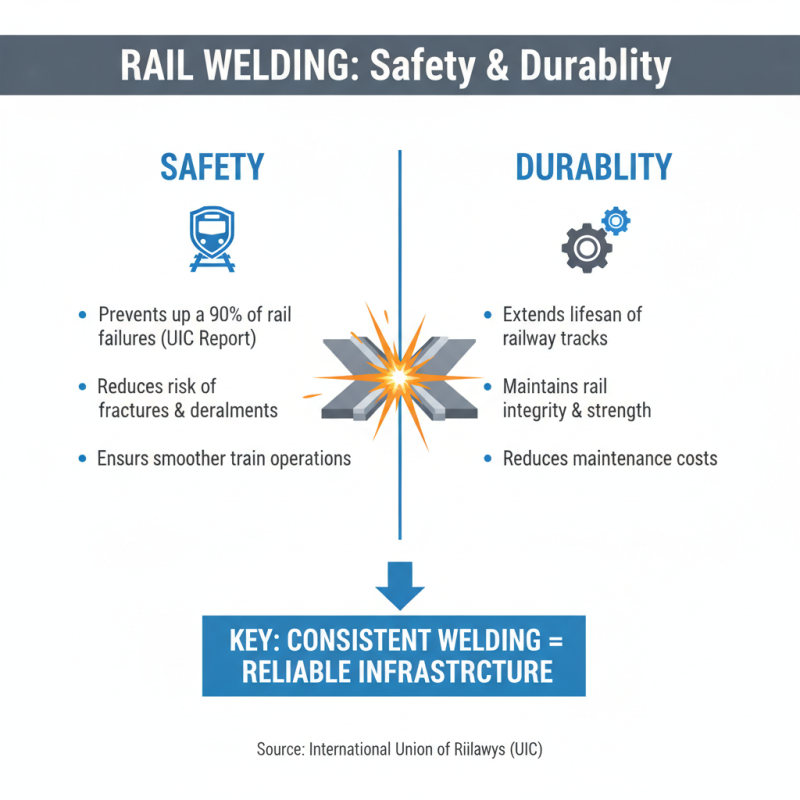
Rail welding technology plays a crucial role in enhancing the safety and durability of railway infrastructure. According to a report from the International Union of Railways (UIC), approximately 90% of rail failures are attributed to defects in welds and joints. This highlights how essential effective rail welding techniques are to maintaining rail integrity. Consistency in welding processes reduces the likelihood of fractures and failures, ensuring smoother train operations.
An emphasis on quality welding procedures is vital for long-term rail performance. Studies suggest that optimized welding can increase the lifespan of rails by 50% or more. The American Railway Engineering and Maintenance-of-Way Association (AREMA) shows that regular inspections and proper welding reduce maintenance costs significantly. Nonetheless, challenges in training welders persist. Many welders lack access to ongoing education, risking the consistency and quality of welding.
Investing in rail welding technology is not just about efficiency; it's about safety. The Federal Railroad Administration (FRA) emphasizes that robust welds minimize accidents. Despite advancements, there are still cases of poor execution. Proper equipment and adherence to standards are necessary yet often overlooked. Striking a balance between technology and skilled labor is essential for reliable rail infrastructure.
Industry Standards and Innovations in Rail Welding Technology
Rail welding technology plays a crucial role in the construction and maintenance of rail networks. Industry standards are evolving to ensure safety and efficiency. The American Welding Society (AWS) emphasizes quality assurance in rail welding. Their guidelines help to minimize failure risks.
Recent reports show that rail failures often stem from poor weld quality. Data indicates that weld defects account for nearly 40% of rail-related incidents. This underscores the need for stringent standards. Innovations in welding methods, like thermite welding and flash butt welding, enhance durability. These methods improve weld integrity and reduce maintenance costs.
Despite advancements, challenges remain. Not all welding procedures follow established standards. Training for welders varies widely, resulting in inconsistent quality. Regular assessments of welding techniques are necessary to uphold safety. Continuous education in regulations and new technologies is vital for industry improvement. The pursuit of perfection in rail welding continues to evolve, reflecting the industry's commitment to safety and performance.
Rail Welding Technology Innovations Overview
This chart illustrates the efficiency ratings of various rail welding technologies, showcasing the advancements and importance of each method in the industry. Laser welding stands out as the most efficient option, making it a preferred choice for modern rail construction and maintenance.