Leave Your Message

Top 10 Rail Welding Technology Methods for Enhanced Track Performance?

Rail Welding Technology has become essential for maintaining track performance in modern rail systems. Leading expert Dr. Alan F. Reynolds once stated, "Innovative welding techniques can significantly extend track lifespan." This sentiment highlights the crucial role of advanced methods in enhancing rail integrity.

In recent years, the industry has seen numerous welding techniques aimed at improving track performance. However, many approaches still face limitations. For instance, even the most advanced methods can struggle with extreme weather conditions or heavy load scenarios. Achieving the perfect balance between durability and flexibility remains a challenge for engineers.

Exploring the top ten welding technologies reveals both innovative progress and ongoing obstacles. Each method has unique advantages and shortcomings. As the rail industry evolves, a continuous assessment of these technologies will be vital. Identifying areas for improvement is key to ensuring safety and efficiency in rail systems worldwide.
Top 10 Rail Welding Technology Methods for Enhanced Track Performance?

Overview of Rail Welding Technology and Its Importance in Track Performance

Rail welding technology plays a crucial role in enhancing track performance. It ensures smooth trains and reduces maintenance. Proper rail connection minimizes the risk of track failure, which can lead to accidents. Effective welding methods improve track stability and reduce wear and tear.

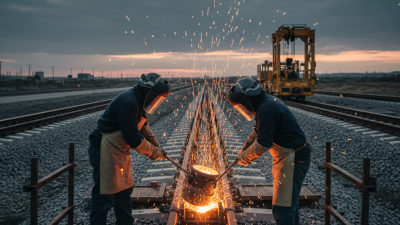
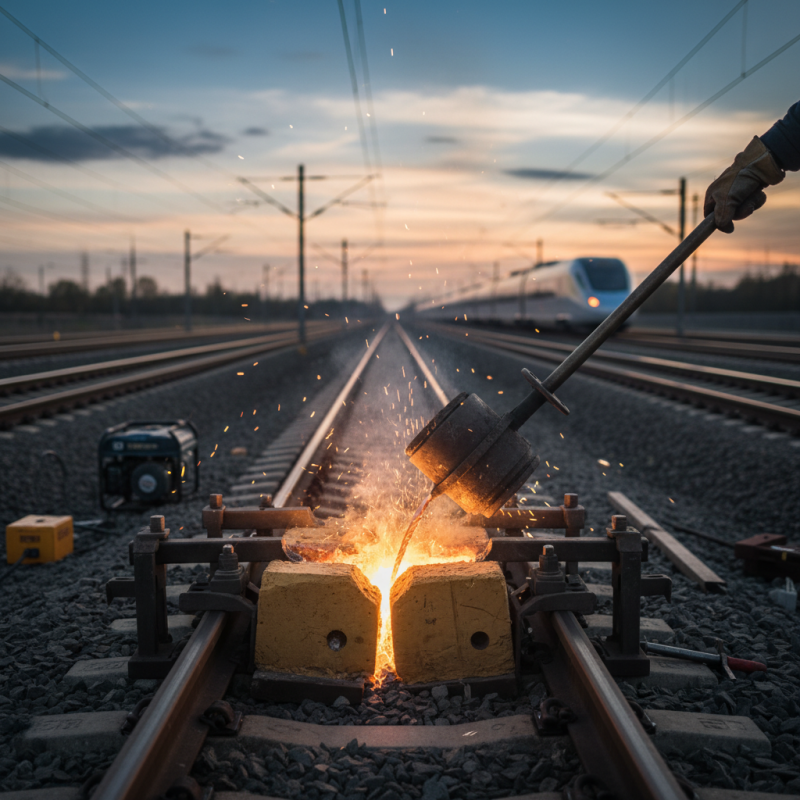
When it comes to rail welding methods, several are noteworthy. Thermite welding is popular for its durability. Electric flash butt welding offers quick and reliable connections. Each method presents its own pros and cons. Research each option thoroughly before making decisions.

Tips for effective rail welding: Keep your working area clean. This prevents contamination during the welding process. Also, regularly inspect your equipment for any wear. A small fault can lead to bigger problems down the line. Remember, even minor imperfections can affect the overall track performance.
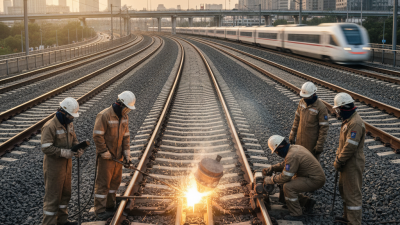
Common Rail Welding Methods Used in the Rail Industry Today

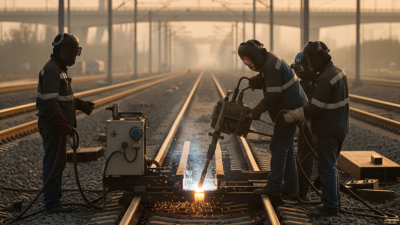
In the rail industry, welding methods are crucial for maintaining track integrity. Various techniques exist, each with unique benefits. One popular method is thermite welding, which uses a chemical reaction to produce molten metal. It’s efficient but requires careful setup. Misalignment during this process can lead to weak joints.

Another common approach is electric arc welding. This method provides good penetration and is highly adaptable. However, the need for skilled operators can be a drawback. Training can be costly and time-consuming. Some operators may struggle with achieving consistent quality.

Flash buttwelding is also widely used. It offers speed and makes strong joints, yet it can present challenges when working with different rail materials. Inconsistent practice among workers can lead to defects. Overall, while these methods enhance track performance, they are not without their limitations and require ongoing evaluation.

Top 10 Rail Welding Technology Methods for Enhanced Track Performance

Method Description Advantages Applications
Flash Butt Welding A process that uses electrical resistance to generate heat and join rails. Fast, high strength welds, minimal maintenance. Heavy rail tracks, high-speed rail.
Aluminum Thermit Welding Uses thermite reaction to fuse two aluminum rail sections. Excellent corrosion resistance, effective for lightweight structures. Streetcars, light rail systems.
Resistance Welding Electrically heats rail ends until melted, then presses them together. Quick setup, repeatable results. High-frequency rail junctions.
Induction Welding Uses electromagnetic induction to generate heat for joining rails. No direct flame, safe, localized heating. Railway crossings, damaged rail repairs.
Ultrasonic Welding Uses high-frequency ultrasonic vibrations to merge rail components. Minimal thermal impact, very precise. Rail sensors, components integration.
Gas Metal Arc Welding (GMAW) An electric arc between a continuous wire electrode and the workpiece melts the metal. Versatile, can be automated. Maintenance repairs, temporary track connections.
Submerged Arc Welding (SAW) Uses an arc between a covered electrode and the workpiece submerged under a layer of flux. High deposition rates, minimal spatter. Heavy structures, thick rail sections.
Plasma Arc Welding Utilizes a constricted arc that produces a high-temperature plasma. High precision, excellent control over heat input. Precision rail applications, specialist repairs.
Electroslag Welding Melts metal using heat generated from the resistance of the molten slag. Consistent, high-quality welds in thick sections. Heavy rail track installation.
CO2 Welding A variation of GMAW using carbon dioxide as a shielding gas. Cost-effective, widely used. General repairs, low-stressed applications.

Innovations in Rail Welding: New Techniques and Technologies

Rail welding technology is evolving rapidly. Recent innovations focus on improving track performance and increasing safety. According to a 2023 report from the International Association of Railways, modern welding techniques can enhance rail life by up to 30%. This improvement translates to more reliable transportation systems.

One key advancement is the use of laser welding. This method offers precision and strong joints, but its implementation can be complex. Additionally, ultrasonic testing ensures that weld integrity meets safety standards. However, challenges remain in training personnel for these advanced techniques. Lack of expertise can lead to suboptimal welds, which might compromise performance.

Another innovation is friction stir welding. This process reduces heat input, which minimizes rail distortion. Yet, it may not be applicable on all rail types. Data indicates that while these methods increase durability, a comprehensive maintenance strategy is still essential. Continuous assessment of welded joints is crucial for long-term reliability and performance.

Comparative Analysis of Traditional vs. Modern Rail Welding Methods

Rail welding methods have evolved significantly. Traditional methods, like thermit welding, are often slower and less efficient. They rely on chemical reactions, which can result in inconsistent weld quality. These inconsistencies lead to increased maintenance costs and more frequent repairs. In contrast, modern techniques such as flash butt welding offer precision and speed. According to recent industry reports, flash butt welding can reduce rail joint repair times by up to 65%.

Another modern method, electrical resistance welding (ERW), showcases enhanced reliability. ERW produces a continuous weld, enhancing overall track performance. Studies have shown that tracks welded using ERW exhibit lower failure rates and require less frequent maintenance. However, not all rail operators have adopted these newer technologies. Resistance to change and training costs are common concerns.

Both traditional and modern methods have their places. However, many rail companies recognize the need for improvement. Quality control in traditional welding remains a challenge. It's crucial to address these issues to maximize safety and performance. The railway industry faces pressure to balance cost with technological advancement. Embracing innovation could lead to safer, more efficient rail networks.

Best Practices for Implementing Effective Rail Welding Solutions

Top 10 Rail Welding Technology Methods for Enhanced Track Performance?

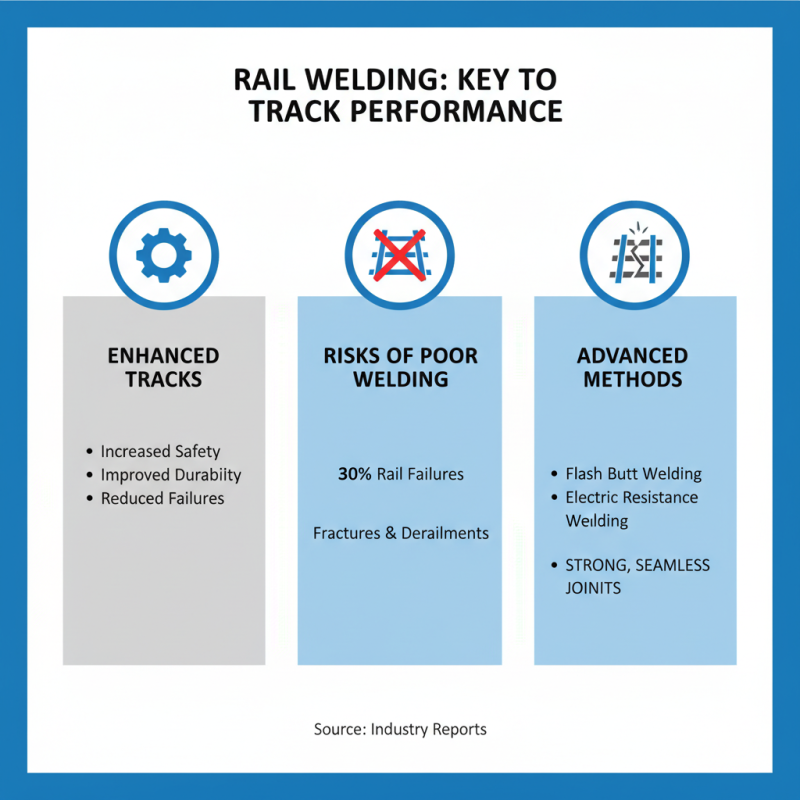
Rail welding technology plays a critical role in enhancing track performance. Proper implementation is essential for safety and durability. According to industry reports, nearly 30% of rail failures can be attributed to poor welding practices. This highlights the importance of using advanced methods such as flash butt welding and electric resistance welding. These techniques create strong joints, reducing the risk of fractures.

Adopting best practices is crucial in the welding process. Training personnel is a key element. Skilled operators are necessary to ensure that the welding parameters are met. A report by the American Railway Engineering and Maintenance-of-Way Association noted that properly trained welders can reduce defects by 40%. Regular inspections also play a vital role. They help identify potential issues early. Implementing a robust quality control system is essential for consistent results.

Investing in new technologies can be challenging. However, the benefits often outweigh the costs. For example, Automated Remote Welding Systems can improve precision. They may still require human oversight. Despite advancements, some companies struggle with adaptation. This can lead to inconsistent welding quality. Awareness of these challenges can help the industry make better choices in rail welding practices.