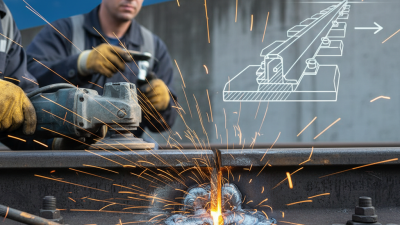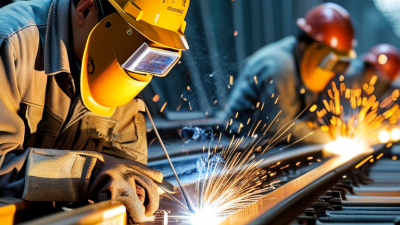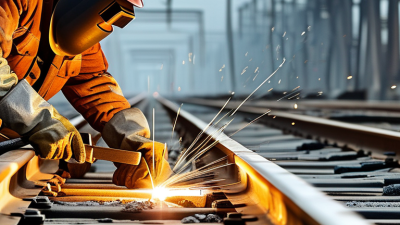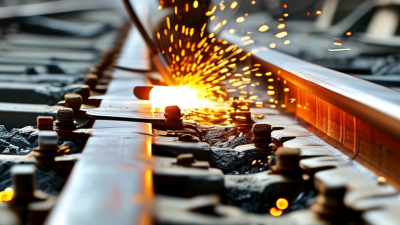
Aluminothermic Welding remains essential for joining rail tracks, tram lines, grounding networks, and heavy steel sections without workshop access. A field-ready kit may contain a crucible, mold, welding portion, preheating torch, and finishing tools. Small omissions matter. A missing mold can stop an entire night shift.
The UIC Railway Statistics 2024 report illustrates the continuing scale of global rail infrastructure, while UNIFE’s World Rail Market Study 2024–2025 highlights sustained investment in railway systems and maintenance. These reports do not rank welding kits directly. However, they show why dependable rail-joint equipment matters to contractors, infrastructure owners, and international distributors. EN 14730-1 and relevant AREMA guidance also remind buyers to examine process approval, operator competence, quality control, and traceability.
Hans Goldschmidt, whose work established the thermite process, explained its principle in practical terms: “Aluminium removes oxygen from metal oxides and releases intense heat.” That reaction creates molten steel for a carefully prepared joint. The chemistry is powerful. The workmanship is decisive.
This guide compares seven Aluminothermic Welding kits for global buyers, considering kit completeness, portion compatibility, mold accuracy, heating performance, portability, documentation, and after-sales support. We also consider regional voltage requirements, replacement-part access, packaging durability, and training materials. A polished case does not guarantee a reliable weld. The market is not perfectly transparent, either. Some specifications appear impressive but lack independent test evidence. Buyers should challenge vague claims, verify standards, and match each kit with approved procedures. No kit is perfect. The safest choice is usually the one that makes correct work easier, repeatable, and auditable.
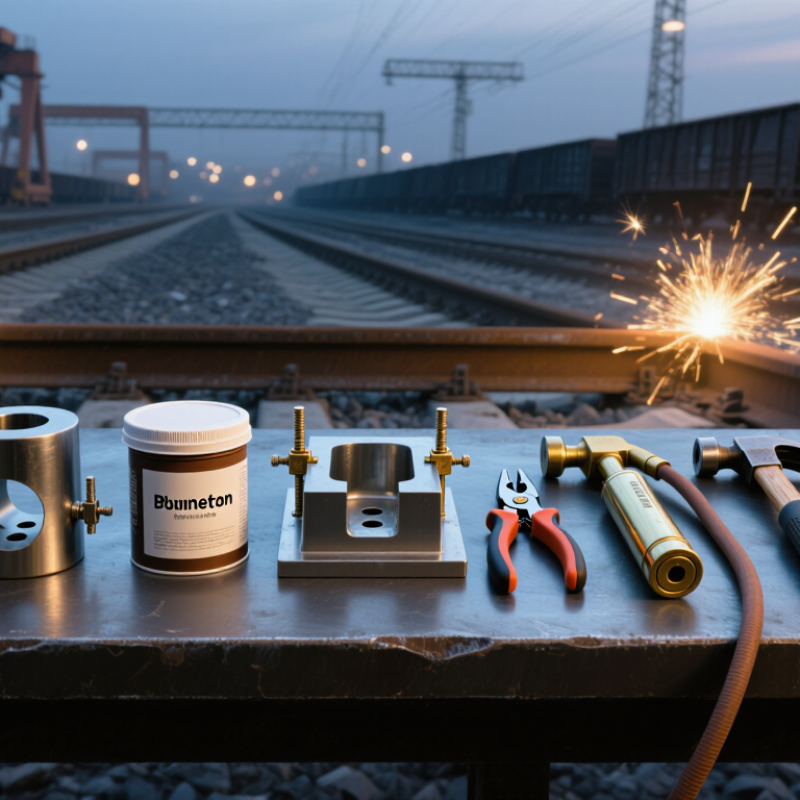
Aluminothermic welding joins metal through a controlled chemical reaction. Aluminum powder reacts with iron oxide and produces intense heat. The reaction creates molten steel, which fills a prepared joint between two metal sections. After cooling, the weld can be trimmed and inspected.
The process is widely used for railway tracks, tram lines, industrial sidings, and remote rail maintenance. It works well where large welding machines are difficult to transport. A typical kit may include molds, crucibles, ignition materials, sealing paste, and finishing tools. Dry conditions matter. Moisture can cause dangerous splashing and weak welds. Skilled technicians must check rail alignment, gap size, preheating, and cooling time. Small errors can affect service life.
For global buyers comparing seven aluminothermic welding kits, practical completeness matters more than a low purchase price. A reliable kit should match the rail profile, joint type, local standards, and crew training level. Operators also need heat-resistant clothing, face protection, gloves, and a safe work area. The reaction looks simple. It is not.
Field experience shows that preparation often decides the result. A complete box cannot replace accurate inspection or disciplined handling. Some buyers focus heavily on included tools and overlook consumable storage. That choice deserves reconsideration. Product documentation should clearly state material specifications, operating steps, shelf life, and inspection requirements. Local railway authorities may also require approved procedures, records, or qualified personnel.
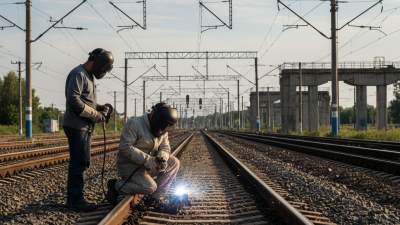
When comparing the seven best aluminothermic welding kits, start with field performance, not catalogue claims. Rail demand makes this practical: the International Energy Agency’s Future of Rail report states that rail carries about 8% of global passenger travel and 7% of freight tonne-kilometres, while using roughly 2% of transport energy. A kit must therefore support repeatable welds under demanding maintenance schedules.
Check each kit against five measurable points: mould accuracy, crucible durability, rail-profile compatibility, consumable control, and inspection access. ISO 3834-2 emphasizes documented welding quality, qualified procedures, traceability, and inspection records. The strongest kits provide batch identification, clear preheating guidance, and tools that remain stable beside dusty track. Look closely at the thermite charge, ignition method, and cutting equipment. Small inconsistencies can create large repair costs.
Portability matters too. Compare packed weight, handle design, setup time, and replacement-part availability across the seven options. A compact kit may appear efficient, yet weak clamps or fragile moulds can slow a night shift. Measure actual preparation time.
Do not trust a perfect scorecard. Site conditions vary.
Experienced crews should test sample welds, record preheat temperature, and examine surface defects before approving regular use. Independent tensile or ultrasonic testing adds confidence, although field checks alone may miss internal flaws. The best choice is rarely the cheapest or most feature-heavy kit; it is the one that delivers consistent results, documented control, and practical support in the buyer’s operating region.
Choosing among seven aluminothermic welding kits starts with components, not the carrying case. According to the ITF Transport Outlook 2023, transport demand may nearly double by 2050 under current policies. That pressure makes repeatable weld quality more valuable than a low purchase price. A practical kit needs correctly sized molds, charge portions, a crucible, ignition equipment, and rail preparation tools. Include a calibrated preheating gauge. Small omissions become expensive.
Field technicians also need stable temperature control, dry consumables, and clear batch identification. EN 14730-2 emphasizes qualification, inspection, and weld acceptance for rail applications. Buyers should request test certificates, storage limits, expiry dates, and instructions for the exact rail profile. A heat-resistant face shield and gloves are not optional extras. Neither is a stable work platform. Portability matters, but lighter is not automatically better. I have seen compact kits sacrifice tool rigidity, making alignment slower beside an active railway.
The World Bank’s Railway Reform report links disciplined maintenance practices with lower lifecycle risk, although it does not endorse one welding method. That limitation matters. Compare kits by documented yield, setup time, inspection access, and local training support. Ask whether replacement molds and crucibles remain available after five years. Many buyers overlook this question. Traceability is another quiet advantage: serial numbers, batch records, and inspection photographs expose recurring defects. Still, no checklist replaces competent supervision. Even the best kit fails when preheating is guessed.
For global buyers comparing aluminothermic welding kits, correct preparation matters more than the kit’s advertised output. The UIC Railway Statistics 2024 publication records over one million route-kilometres worldwide, showing why consistent field procedures matter. Wear flame-resistant clothing, face protection, gloves, and hearing protection. Confirm local railway rules before work. Inspect the rail ends, mold, crucible, charge, and ignition system. Never use wet or damaged components.
Secure the rails and remove rust, paint, oil, and moisture from the weld gap. Align the rail heads carefully, then clamp the mold around the joint. Seal every opening with approved luting material. Preheat the rail ends evenly, following the kit’s written temperature and timing requirements. This step is easy to rush. Do not guess by color alone. Place the measured charge into the crucible, stand clear, and ignite it only with the supplied method. The molten metal flows into the mold and fuses the rail ends.
Allow the joint to cool naturally. Remove the mold only after the specified waiting period. Trim excess metal with suitable tools, then grind the rail head and check its profile. Use a gauge and visual inspection before reopening the track. EN 14730-2 emphasizes inspection and acceptance controls for rail welds. Record batch details, weather, preheating time, and operator checks. A small record can reveal repeated defects later. My practical caution is simple: even experienced teams can overlook moisture after overnight rain. Recheck it.
7 Best Aluminothermic Welding Kits for Global Buyers
Global buyers should assess aluminothermic welding kits beyond price and advertised output. A reliable kit should include compatible molds, crucibles, ignition materials, protective equipment, and clear instructions. Check whether the system suits your rail profile, joint design, and working environment. Local standards may require certified welders, inspection records, or specific testing procedures. Do not assume one certificate works everywhere. Requirements can differ between countries and even between railway operators.
Safety depends on preparation and disciplined handling. Welding areas need controlled access, dry surfaces, fire protection, and suitable ventilation. Operators should use heat-resistant clothing, face shields, gloves, and footwear rated for molten metal work. Review the safety data sheets before purchase. They reveal storage limits, transport classifications, and emergency guidance. A small missing item can stop a project. That mistake is easy to underestimate.
Tips: Ask suppliers for a complete packing list, recent technical documents, and training evidence. Confirm whether consumables match the supplied molds and rail chemistry. Request photographs of packaging before shipment. Shipping may involve regulated ignition materials or reactive components, so verify carrier acceptance and customs paperwork early. Use strong, moisture-resistant packaging with visible handling instructions. Independent inspection can also help, although it adds time and cost. No checklist is perfect; buyers should record every assumption and revisit it before ordering.
| Rank | Kit Type | Typical Rail or Profile Range | Typical Weld Portion | Approx. Welds per Kit | Typical Packed Weight | Preheating Method | Main Contents | Safety Requirements | Relevant Standards or References | Shipping Considerations | Best Use Case |
|---|---|---|---|---|---|---|---|---|---|---|---|
| 1 | Universal Heavy-Rail Kit | Approximately 60–75 kg/m rail sections | About 2.5–3.5 kg per weld | 4–6 welds | Approximately 18–25 kg | Propane-air or oxy-fuel preheating, according to the approved procedure | Portioned weld material, single-use molds, crucibles, tapping plates, ignition materials, thermocouple or temperature-check tools, finishing tools, PPE guidance | Trained welders, exclusion zone, face and hand protection, heat-resistant clothing, dry molds, fire-control equipment | EN 14730-1 and EN 14730-2 where applicable; welding procedure approval and local railway requirements | Ignition materials and reactive welding portions may require dangerous-goods review; use moisture-resistant outer packaging | Main-line rail maintenance and general heavy-rail field work |
| 2 | Light-Rail Maintenance Kit | Approximately 35–60 kg/m rail sections | About 1.5–2.5 kg per weld | 6–10 welds | Approximately 12–18 kg | Portable propane-air torch or approved equivalent | Small and medium molds, weld portions, crucibles, alignment clamps, slag removal tools, temperature indicators and consumable accessories | Secure rail alignment, controlled preheat, dry work area, respiratory and eye protection where required by the risk assessment | Applicable rail authority procedure; EN 14730 series may apply to railway aluminothermic welding | Lower shipment weight, but ignition components can still trigger carrier restrictions and customs documentation | Urban rail, light rail, sidings and depot track repair |
| 3 | Grooved-Rail and Tramway Kit | Approximately 41–60 kg/m grooved or special-profile rail | About 2.0–3.0 kg per weld | 4–8 welds | Approximately 18–24 kg | Gas preheating with profile-specific temperature control | Profile-matched molds, weld portions, crucibles, mold sealing materials, rail clamps, finishing tools and inspection accessories | Traffic isolation, protection from moisture and contamination, correct mold fit, adequate ventilation and hot-metal precautions | Project-specific approved welding procedure; EN 14730 requirements may be referenced for railway applications | Custom molds may increase lead time; confirm profile drawings and import classification before dispatch | Street-running tramways and grooved-rail systems |
| 4 | Heavy-Duty Continuous-Weld Kit | Approximately 60–75 kg/m and other heavy rail profiles | About 3.0–4.0 kg per weld | 3–5 welds | Approximately 22–30 kg | High-capacity propane-air or oxy-fuel preheater with calibrated temperature checks | Large weld portions, heavy-duty molds, crucibles, preheating accessories, rail alignment equipment, cutting and grinding tools | Strict worksite isolation, competent personnel, hot-work permit, fire watch, heat-resistant PPE and post-weld inspection | EN 14730 series, infrastructure-owner specifications and approved welding procedure qualification | Heavier cartons and multiple restricted components may require freight forwarding or specialist dangerous-goods handling | High-load freight corridors, heavy-haul lines and intensive maintenance programs |
| 5 | Compact Emergency Repair Kit | Approximately 35–60 kg/m compatible profiles | About 1.5–2.5 kg per weld | 2–4 welds | Approximately 10–15 kg | Compact propane-air preheater, subject to the approved welding procedure | Limited weld portions, compact molds, basic crucible set, alignment accessories, hand finishing tools and inspection checklist | Emergency use does not remove training, isolation, PPE, fire-control or quality-inspection requirements | Use only where accepted by the infrastructure owner and supported by a qualified procedure | Small packaging is convenient, but restricted ignition materials may not qualify for ordinary parcel service | Remote locations, breakdown response and short-duration track access windows |
| 6 | Switch, Crossing and Special-Profile Kit | Special rail, crossing and turnout profiles; commonly 50–75 kg/m | About 2.5–4.0 kg per weld | 3–6 welds | Approximately 20–28 kg | Profile-specific gas preheating and measured preheat duration | Special-profile molds, larger weld portions, alignment clamps, crucibles, riser-cutting tools and detailed inspection materials | Accurate profile identification, controlled joint geometry, enhanced inspection and strict compliance with turnout maintenance procedures | Infrastructure-owner specification plus applicable EN 14730 qualification requirements | Molds are often profile-specific; provide technical drawings, packing dimensions and import documents in advance | Turnouts, crossings, switch zones and non-standard rail geometry |
| 7 | Training and Small-Quantity Demonstration Kit | Light and medium rail profiles, subject to mold compatibility | About 1.5–2.5 kg per weld | 1–2 welds | Approximately 8–12 kg | Portable preheater for supervised training exercises | One or two weld portions, training molds, crucible, sample tools, procedure documentation and basic inspection accessories | Use only in a controlled training area with an experienced supervisor, approved PPE and fire-safety controls | Training content should reflect the applicable railway welding procedure and local occupational-safety rules | Usually easier to consolidate, but ignition and reactive materials still require carrier and customs checks | Training centers, contractor qualification and controlled demonstrations |