Leave Your Message

How to Choose the Right Rail Equipment for Your Business

Choosing Rail Equipment is not a catalog exercise. It is a decision about workload, site conditions, maintenance capacity, and the people who will operate it. A locomotive suited to a short industrial line may struggle with steep grades or frequent starts. A wagon that looks efficient on paper may not fit your loading equipment. Small mismatches become expensive.

Railway engineering author William J. Hay provides a useful engineering perspective. Paraphrased, his lesson is: “Match the equipment to the service it must perform.” Treat that as a starting point, not a complete answer. Your team should compare duty cycles, load limits, track condition, power needs, spare-parts access, and supplier support. Ask for operating data, inspect critical components, and check how servicing will work at your actual site. Get operators and maintenance staff involved early. They often notice practical issues that specifications miss.

There is no perfect choice.

A lower purchase price can bring higher downtime. Advanced features may also create training or maintenance demands your team is not ready to handle. That does not make new technology a poor choice; it means the trade-offs deserve honest review. This guide explains how to define requirements, compare equipment types, assess lifecycle costs, and evaluate vendors. It also flags common gaps in the buying process, including unclear performance assumptions and optimistic maintenance estimates. Use the recommendations as a framework, then verify them against your route, budget, and operating records. The best Rail Equipment is the equipment your business can safely operate, maintain, and rely on over time.
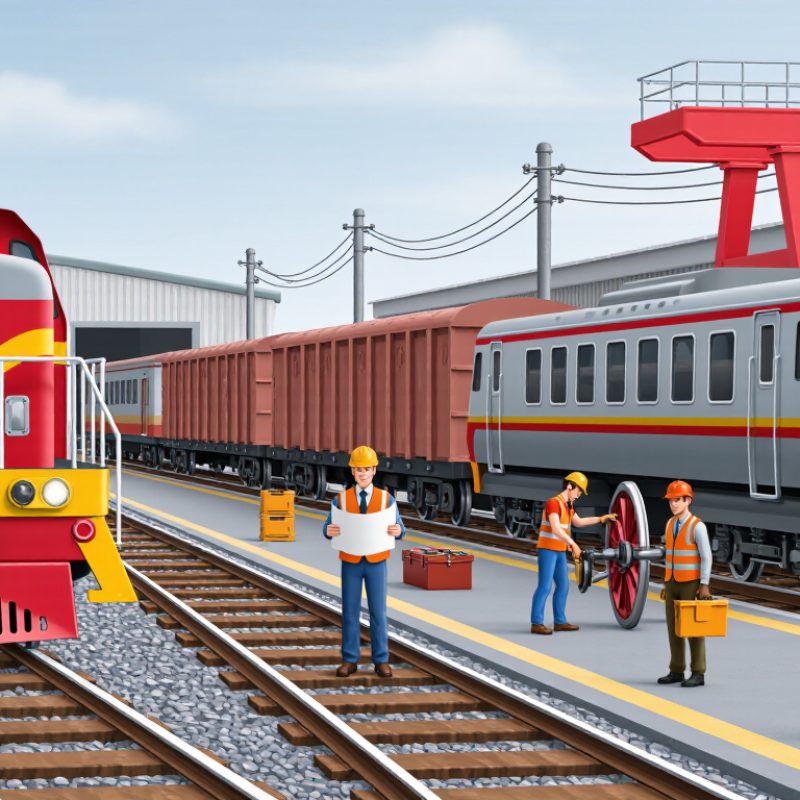
How to Choose the Right Rail Equipment for Your Business

Define Your Business’s Rail Transport Requirements

Define the freight before choosing the rail equipment. Record each commodity’s weight, dimensions, packaging, and loading method. A palletized shipment may need a boxcar and forklift access; loose grain may call for covered hoppers and suitable unloading pits. Measure twice. Include the number of loads per week, seasonal peaks, and acceptable delivery windows. A railcar that fits the product may still fail at your dock.

Map every origin and destination, including siding length, track access, clearance limits, and available loading equipment. The Association of American Railroads’ 2024 Freight Railroads and the Economy overview reports that rail carries about 28% of U.S. freight ton-miles. Its scale makes route compatibility and transfer points practical planning concerns, not minor details. Check whether the intended car can reach the site and whether crews can load or unload it safely within the operating window.

Estimate average and peak volume separately, then test the plan against a busy month. The U.S. Department of Transportation’s Bureau of Transportation Statistics publishes Freight Facts and Figures, a useful source for comparing freight modes and movement patterns. Keep a small buffer for uneven demand. One forecast will be wrong; mine often is. Note special handling needs, such as weather protection or temperature control, and confirm those requirements with the carrier before selecting equipment.

Assess Site Conditions, Routes, and Operating Demands

Choosing rail equipment starts with the ground beneath it. Measure track gauge, curve radius, gradient, clearances, and bearing capacity before comparing machine specifications. A compact locomotive may suit a short industrial spur, but tight curves or weak track can limit its load. Check drainage, crossing surfaces, and overhead obstructions in person. A site plan can miss a low pipe or a muddy access point.

Routes matter too. The Association of American Railroads reported that rail carries about 28% of U.S. freight ton-miles. That scale reflects varied operating conditions, not one standard route. Map each journey, including sidings, switching areas, and loading zones. Record distance, slope, speed restrictions, and the heaviest expected load. Small details count.

Then match equipment to duty cycles, not just peak capacity. Estimate daily trips, operating hours, payload, and stop frequency. The Federal Railroad Administration’s Railroad Facts provides useful context on the U.S. rail network, but local track inspections should guide site decisions. Ask operators where delays occur and what maintenance access looks like. I would not treat a single site visit as complete evidence; seasonal conditions can change traction and ground support. Leave room for that uncertainty when selecting equipment.

Compare Rail Equipment Types, Capacity, and Features

Choose equipment around the freight’s shape, weight, and handling needs. Boxcars protect palletized goods; flatcars carry machinery; gondolas suit scrap or aggregates; covered hoppers serve grain, cement, and other dry bulk. Tank cars transport liquids, but material compatibility and loading conditions require specialist review. Fit matters.

Compare payload rating with usable volume, axle limits, door size, and unloading method. A car can reach its weight limit before filling, or run out of volume first. The Association of American Railroads’ Railroad Facts 2024 reports that rail freight moves one ton nearly 500 miles per gallon of fuel, underscoring rail’s value for sustained, high-volume movements. That efficiency does not make every car suitable. A spreadsheet may miss a tight siding, low clearance, or awkward discharge angle.

Tips: Measure the narrowest track clearance and confirm the heaviest single load. Ask operators to verify loading and unloading compatibility before committing. Check twice. Test the choice against a typical shipment, not just a peak-season estimate; actual demand can be messier than forecasts.

How to Choose the Right Rail Equipment for Your Business

Compare typical freight railcar payload ranges. Actual capacity depends on the car’s design, axle-load limits, route, and cargo.

Use these ranges as an initial guide: match the car type to your cargo, then confirm the permitted payload with the equipment specification and route limits.

Check Compatibility, Safety Standards, and Regulatory Requirements

Before buying rail equipment, confirm that it matches your tracks, loads, and operating conditions. Check track gauge, axle-load limits, loading-gauge clearance, couplers, and braking systems. A wagon that fits the rails may still exceed bridge limits or conflict with platform clearances. Small gaps matter.

Safety requirements depend on where and how equipment will operate. In the United States, verify applicable Federal Railroad Administration rules, inspection intervals, and maintenance records; interchange operations may also require compliance with relevant industry standards. Ask suppliers for documented test results and inspect critical parts, such as wheelsets, brake hoses, and coupler locks. Paperwork alone is not proof of condition.

Use published data as context, not as a substitute for an equipment assessment. The Association of American Railroads’ 2024 safety materials report that the U.S. freight-train accident rate is roughly 40% lower than in 2000. That trend reflects system-wide performance, not a guarantee about any individual vehicle. Requirements also vary across jurisdictions, so confirm them with the relevant regulator before purchase. I’ve seen teams focus on capacity and overlook maintenance access; that’s an easy mistake to repeat.

How to Choose the Right Rail Equipment for Your Business — Check Compatibility, Safety Standards, and Regulatory Requirements
Equipment Type Compatibility Checks Safety Standards and Criteria Regulatory Requirements to Verify Evidence to Request Before Purchase
Locomotive Confirm track gauge, axle load, loading-gauge clearance, coupler type and height, braking interfaces, power supply, and any signaling or communications interfaces required on the route. Check braking performance, fire protection, crew access and visibility, emergency controls, and compatibility with the train’s operating and braking systems. In the United States, verify applicable Federal Railroad Administration requirements, including 49 CFR Part 229 for locomotive safety and Part 232 for brake-system safety. Requirements depend on equipment and operation. Technical specifications, inspection and maintenance records, brake test results, equipment condition reports, and documentation showing the applicable regulatory basis.
Freight car or wagon Match gauge, axle load, wheel profile, coupler and draft gear, brake connections, loading gauge, route clearances, and the cargo’s weight and loading method. Assess wheel and axle condition, structural integrity, securement arrangements, brake condition, and suitability for the intended cargo, including any hazardous-material service. In the United States, check 49 CFR Part 215 for freight-car safety and Part 232 for brake systems. Hazardous-material shipments may also be subject to applicable requirements in 49 CFR Parts 171–180. Inspection history, wheel and axle records, brake-system documentation, load limits, repair history, and any required hazardous-material service documentation.
Passenger rail vehicle Verify platform height and gap, vehicle clearance, train-control and communications interfaces, couplers, braking, power supply, and accessibility needs on the intended route. Review crashworthiness, emergency egress, fire safety, passenger doors, accessibility features, and the compatibility of the complete train consist. In the United States, 49 CFR Part 238 addresses passenger-equipment safety. Other applicable requirements may cover accessibility, operating rules, and route authorization. Safety and accessibility documentation, maintenance records, emergency-egress details, brake-test results, and confirmation that the vehicle is approved for the intended service.
Track maintenance machine Check gauge, axle load, curve and gradient limits, operating and transport modes, clearance envelope, rail-wheel interface, and compatibility with track possession and worksite procedures. Evaluate guarding, work-tool interlocks, stability, visibility, safe access, emergency stops, and procedures for moving between work and travel modes. In the United States, 49 CFR Part 213 covers track safety standards; additional federal, state, workplace, and railroad operating requirements may apply to the machine and its use. Machine specifications, risk assessments, inspection and maintenance records, operating instructions, and evidence of compliance with applicable workplace and rail rules.
Rail brake components Confirm the component is designed for the vehicle type and brake system, and check pressure, connection, control, and replacement-part interfaces. Verify rated operating conditions, wear limits, fail-safe behavior, inspection intervals, and performance as part of the assembled braking system. Check the brake-system rules applicable to the vehicle and jurisdiction. In the United States, 49 CFR Part 232 includes requirements for railroad power brakes and related equipment. Component specifications, test and certification records where required, service-life limits, maintenance instructions, and traceable inspection documentation.
Signaling or train-control equipment Confirm interfaces with onboard equipment, trackside systems, communications, power, software versions, and the infrastructure on every intended route. Assess system hazards, failure modes, cybersecurity considerations, operating procedures, and the effect of integration on the safety of the railway system. Requirements are jurisdiction- and project-specific. In the European Union, relevant interoperability requirements may include the Control-Command and Signalling TSI; confirm the current applicable rules and authorization process. Interface-control documents, safety-case or risk-assessment documentation, configuration records, test results, and evidence of the required system authorization.
Regulatory requirements vary by country, railway, equipment configuration, and intended use. Confirm current rules and route-specific acceptance requirements with the relevant regulator and infrastructure operator before selecting or placing equipment into service.

Evaluate Lifecycle Costs, Maintenance, and Supplier Support

A rail equipment quote is only the opening number. Compare expected service life, energy use, spare-parts costs, and downtime across the full ownership period. The Association of American Railroads reported that U.S. freight railroads spent $23.3 billion on capital expenditures and maintenance in 2022. That figure shows how significant upkeep is across the industry, though it is not a cost forecast for any single operator. Ask suppliers for maintenance intervals, component replacement estimates, and written assumptions behind their lifecycle-cost calculations. Then test those assumptions against your own routes, loads, climate, and workshop capacity.

Maintenance plans matter most when equipment is out of service. Request realistic repair times, parts availability, technician response targets, and training details. The Federal Transit Administration’s Transit Asset Management framework emphasizes tracking asset condition and prioritizing investments; use the same discipline when comparing bids. Look for service records and clear warranty exclusions, not just polished projections. A supplier’s support can be difficult to measure until a fault occurs. Ask who answers at 2 a.m., where critical parts are stocked, and how delays are reported. One uncomfortable question helps: what happens when the promised savings do not appear? Keep the answer—and the assumptions—in writing.