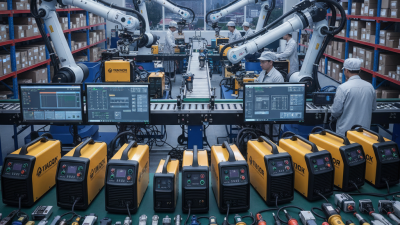
10 Best Welding Tools and Equipment for Global Buyers
Global manufacturing is changing, but welding remains essential to bridges, pipelines, vehicles, machinery, and small workshops. Grand View Research estimates that the global welding equipment market reached approximately USD 16 billion in 2023. Its report also projects steady growth through 2030, driven by automation, infrastructure investment, and equipment replacement. These figures matter to buyers. They show demand, but not necessarily quality.
This guide examines 10 Best Welding Tools and Equipment for Global Buyers. It considers welders, electrodes, torches, clamps, helmets, fume extractors, cables, and inspection tools. Each category requires a different purchasing decision. Duty cycle, input voltage, certification, spare-part access, and operator training can change the real cost. A low-priced machine may become expensive after freight, adapters, downtime, and maintenance are included. Small details matter.
Dr. David H. Phillips, author of Welding Engineering: An Introduction, emphasizes that welding should be treated as a controlled engineering process, not simply as melting metal. That principle guides this selection. The American Welding Society’s workforce research has also warned of a major shortage of skilled welding professionals in the United States. Equipment cannot replace judgment. It can support it. Buyers should compare documented performance, safety features, supplier support, and applicable standards before ordering. Some product claims remain difficult to verify across markets. That is an uncomfortable limitation. Therefore, this overview focuses on practical evidence, transparent specifications, and realistic workshop conditions. The best Welding Tools Equipment choice is not always the most advanced model. It is the one that performs reliably, safely, and economically in its intended environment.
Types of Welding Tools and Equipment Used in Global Fabrication
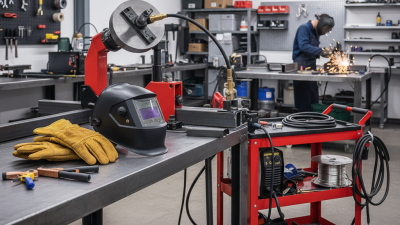
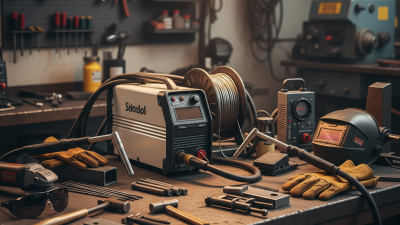
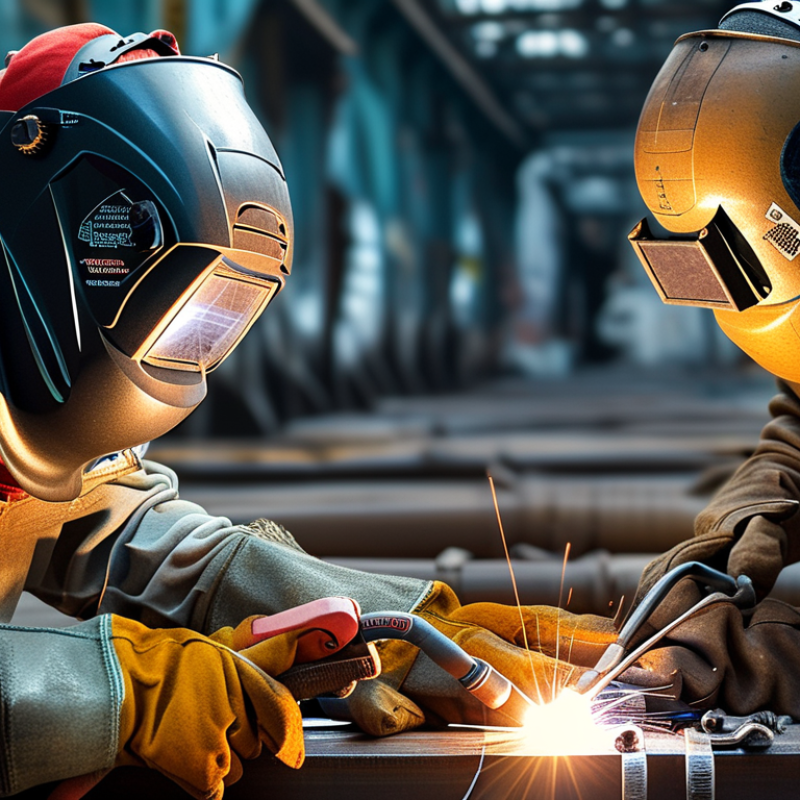
Global fabrication shops use different welding tools according to material, joint design, and production volume. Shielded metal arc welding needs a power source, electrode holder, work clamp, and coated electrodes. It suits outdoor repairs because wind affects shielding gas less. However, slag removal takes time.
MIG and MAG systems use a wire feeder, welding torch, gas regulator, and shielding gas cylinder. They support fast production on steel, stainless steel, and aluminum. TIG equipment adds a tungsten torch, foot control, and high-frequency start. It gives cleaner control on thin sections. Plasma cutters can prepare edges before welding, but operators must control heat and cutting speed.
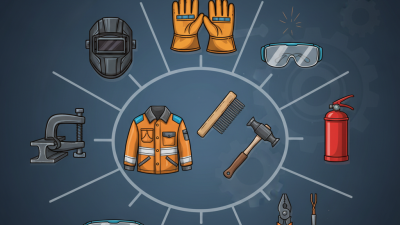
Small tools matter too. Fit-up clamps, angle grinders, wire brushes, chipping hammers, and weld gauges improve joint accuracy. Positioners reduce awkward body movement. Fume extraction protects air quality, while helmets, gloves, flame-resistant clothing, and safety footwear protect the operator. Keep it practical.
Global buyers should check input voltage, duty cycle, spare-part access, gas compatibility, and certification requirements before ordering. I have seen buyers focus on low prices and overlook local electrical standards. That mistake can stop production. Test sample welds with the actual material and consumables. Even experienced teams need this step. A neat bead can still hide poor penetration. Record settings, inspect welds, and question results that look unusually perfect.
Top Welding Machines for Different Materials and Applications
Choosing the right welding machine depends on material thickness, joint access, production speed, and site conditions. For carbon steel, MIG/MAG machines suit fabrication shops because continuous wire reduces stoppages. Stick welders remain practical outdoors, especially where wind affects shielding gas. TIG machines deliver cleaner control for stainless steel and aluminum, but they demand steadier hand movement and better surface preparation. Thin aluminum can punish careless settings. It distorts quickly.
Grand View Research estimated the global welding equipment market at approximately USD 15 billion in 2023, with continued growth expected through 2030. This expansion reflects demand from construction, automotive production, energy infrastructure, and repair services. A 2024 industrial automation report from the International Federation of Robotics also identified welding as a major application for factory robots. Automated systems need stable power sources, accurate wire feeding, and repeatable torch positioning. Manual operators still matter when joints vary or access becomes difficult. Laser welding offers narrow heat-affected zones and high speed, yet its higher equipment cost and strict fit-up requirements may limit smaller workshops. That limitation is easy to overlook. Buyers should check duty cycle, input voltage, consumable availability, operator training, and compliance with ISO 9606-1 qualification practices. In real purchasing decisions, a cheaper machine may create more downtime, spatter, and rework. Specification sheets rarely show the full cost.
Essential Welding Accessories for Accuracy, Efficiency, and Control
10 Best Welding Tools and Equipment for Global Buyers
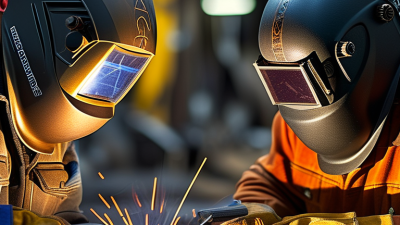
Reliable welding depends on more than a power source. A clear auto-darkening helmet protects vision and improves control during arc starts. Heat-resistant gloves, a flame-resistant jacket, and sturdy boots support safer, steadier work. Clamps, magnetic squares, and adjustable fixtures hold parts in alignment. Small movement can create a large joint problem.
Accuracy improves with a wire brush, chipping hammer, measuring tape, and welding gauge. Clean metal helps reduce contamination and uneven bead formation. A properly fitted ground clamp supports a stable arc. For gas-shielded processes, a flow meter helps maintain consistent coverage. Use suitable filler materials for the base metal and joint design. Always check local safety requirements before purchasing equipment for another country. Standards and electrical systems may differ. I have learned that expensive tools cannot correct poor preparation. A perfect setup is rare.
Tips: Test fit-up before striking the arc. Keep lenses, tips, and contact surfaces clean. Check cables for cuts and loose connections. Adjust settings on scrap metal first. Do not rush the first pass. It often reveals hidden alignment errors. Record useful settings for repeat jobs, but question them when material thickness changes. A short inspection under strong light can reveal pores, undercut, or missed edges. Fresh equipment is helpful, but careful habits matter more.
How Global Buyers Compare Quality, Standards, and Total Cost
10 Best Welding Tools and Equipment for Global Buyers
Global buyers rarely choose welding equipment by price alone. They compare arc stability, duty cycle, energy use, service access, and compliance documents. In practical sourcing, a machine with a lower price can create higher costs through downtime, rejected welds, and difficult repairs.
Standards provide a useful filter. ISO 3834 defines quality requirements for fusion welding, while ISO 9001 supports documented quality systems. The ISO Survey 2022 reported 1,265,216 ISO 9001 certificates worldwide. This does not prove perfect production, but it indicates how widely structured quality control is used. Buyers should also check relevant regional requirements, test reports, calibration records, and welding procedure qualifications. Some suppliers provide attractive documents. The details may still be incomplete.
Tips: Request a sample weld made on your actual material and thickness. Measure penetration, distortion, and visual defects. Compare the result with the supplier’s inspection record. Ask for the expected electrode or wire consumption per project. Include freight, import duties, training, maintenance, spare parts, and electricity in the total-cost model. Industry market studies, including the 2024 welding equipment analysis by Grand View Research, continue to identify automation and energy efficiency as important growth factors. Yet automated equipment is not always the best choice. A simpler unit may perform better where operators, power quality, or technical support are limited. I still find total-cost comparisons imperfect, because local repair time is difficult to price.