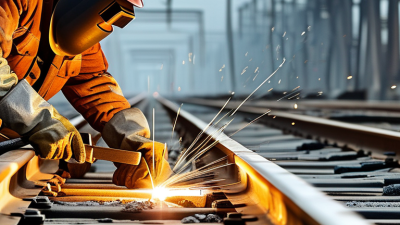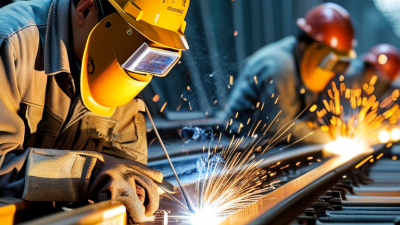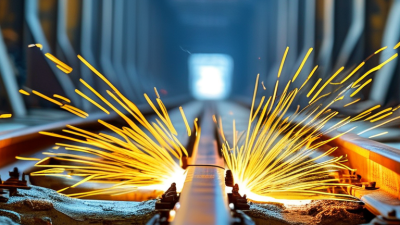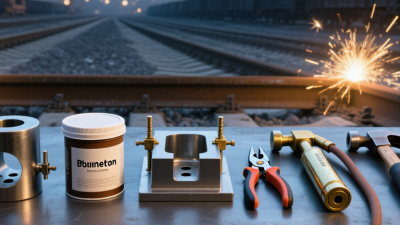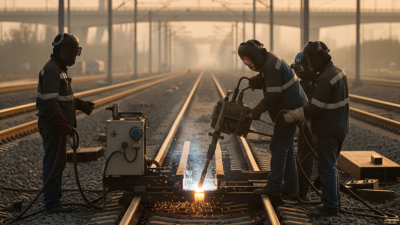
China’s rail network continues to expand, creating sustained demand for dependable rail-joining technologies. Aluminothermic Welding Rail remains important where site access, track possession time, and field repair conditions limit large machinery. The process uses a controlled thermite reaction, a preheated rail gap, and a shaped mould. Small errors can leave visible consequences.
Reports from MarketsandMarkets, Research and Markets, and the International Union of Railways identify rail infrastructure renewal, high-speed corridors, and maintenance investment as major market drivers. However, public reports rarely separate aluminothermic rail-welding manufacturers from broader rail-equipment suppliers. That limitation matters. A simple sales ranking may mislead buyers.
Dr. Allan M. Zarembski, a widely recognized railway engineering specialist, has stated, “A weld is only as reliable as the process that creates it.” This principle guides the comparison ahead. The analysis considers welding kits, rail profiles, thermite charge consistency, preheating equipment, mould accuracy, operator training, inspection records, and after-sales support.
China’s leading suppliers differ considerably. Some emphasize high-speed railway projects. Others focus on mining lines, urban transit, or export packages. Product photographs cannot prove field performance. Site references, certification documents, tensile results, and non-destructive testing records provide stronger evidence.
This Top 10 overview therefore evaluates manufacturers through practical engineering criteria, not promotional language alone. The ranking remains open to revision, because company data and project disclosures are uneven. That is the uncomfortable part. Reliable Aluminothermic Welding Rail selection requires both measurable evidence and careful technical judgment.
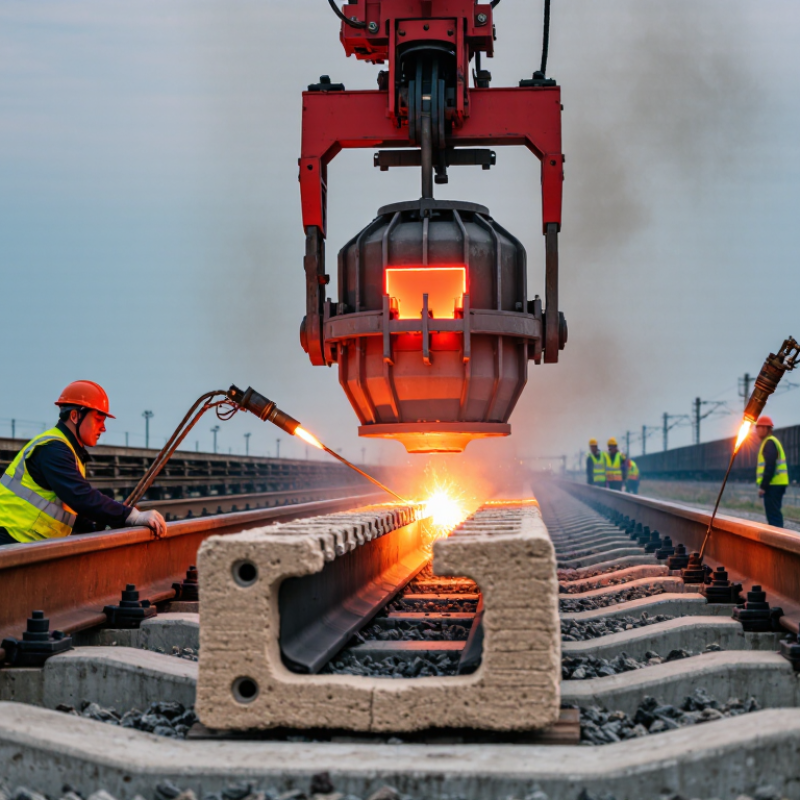
Aluminothermic welding joins rail ends through an intense chemical reaction. Aluminum powder reacts with iron oxide inside a refractory crucible. The reaction produces molten steel and releases substantial heat. This steel flows into a prepared mold around the rail gap. The joint then cools and becomes part of the continuous track.
The method is widely used because it needs no large power supply. Crews can work beside remote track sections, where heavy welding equipment is impractical. A typical process includes cutting, cleaning, alignment, preheating, pouring, and finishing. Rail ends must meet accurately. Even a small height difference can create impact loads under passing wheels. The finished weld is usually trimmed and ground until its profile matches the rail head.
Field reliability depends on more than the welding kit. Moisture, poor preheating, contaminated rail surfaces, or an incorrect gap can weaken the joint. Qualified technicians should control temperature, mold placement, material storage, and cooling time. Non-destructive inspection can reveal internal flaws that visual checks miss. Ultrasonic testing is especially useful after finishing work. The process is efficient, but it is not perfect. I have seen how rushed alignment can undermine an otherwise sound weld. Manufacturers serving this market should provide traceable materials, clear procedures, and practical training, not only attractive technical claims.
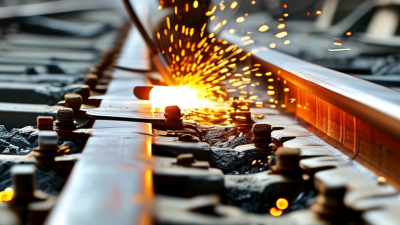
Evaluating China’s top ten aluminothermic rail welding manufacturers requires more than comparing export volume or catalog thickness. China Railway Statistical Bulletin 2024 reported over 162,000 kilometers of operating railway, including roughly 48,000 kilometers of high-speed lines. This scale makes field reliability critical. Reviewers should verify compliance with EN 14730-1 and EN 14730-2, not accept certificates alone. Ask for batch traceability, welding-gap records, preheating logs, and independent tensile and hardness results. Small details matter.
UNIFE’s World Rail Market Study 2024 estimated the global rail supply market at approximately €201.7 billion annually for 2023–2027. This competitive market rewards measurable service quality. Compare alloy chemistry, mold consistency, consumable storage, technician training, and emergency response times. Request three years of defect and nonconformance data. Testimonials are not enough. Independent laboratories should hold ISO/IEC 17025 accreditation, where applicable. Factory visits should include production, testing, packaging, and night-shift controls. A polished audit can still miss discipline after dark. I would also score installation support and spare-part availability. The ranking remains provisional because public data is often incomplete. That is a weakness. Any serious evaluation should record the evidence, testing conditions, rail grade, weather, and repair history before assigning a final position.
China’s Top 10 Aluminothermic Welding Rail Manufacturers are attracting attention as China’s railway network continues expanding. China State Railway Group reported approximately 162,000 kilometers of operating railway lines in 2024, including about 48,000 kilometers of high-speed routes. This scale creates steady demand for portable rail repair, turnout maintenance, and field welding equipment.
The leading ten manufacturers should be assessed through practical evidence, not advertising claims. Important indicators include weld strength, preheating accuracy, mold quality, operator training, and batch traceability. EN 14730-1 and EN 14730-2 provide useful references for aluminothermic welding qualification and process approval. Products aligned with these requirements can improve consistency at remote worksites. Small details matter.
A reliable manufacturer should also provide test records, inspection procedures, and technical support after delivery. China’s railway fixed-asset investment reached about 850.6 billion yuan in 2024, according to the national railway annual report. This investment increases pressure for faster maintenance and dependable repair methods. However, a top-ten list remains partly subjective because public data rarely separates aluminothermic welding sales from broader rail equipment revenue. Buyers should compare independent test results, field experience, and failure-response speed before making a final judgment. Mistakes can still occur, especially when site temperature and operator skill vary.
Rail-grade tensile-strength benchmarks relevant to aluminothermic welding selection
This chart compares the minimum tensile strength of ten rail steel grades specified in EN 13674-1. These standardized values provide a neutral technical reference for matching aluminothermic welding materials and procedures to the rail grade, without ranking or displaying individual manufacturers.
China Top 10 Aluminothermic Welding Rail Manufacturers: Key Products, Technologies, and Industry Applications
China’s leading aluminothermic rail welding manufacturers increasingly focus on complete field-welding systems. Their products include rail welding portions, molds, crucibles, preheating tools, cutting equipment, and inspection gauges. Modern systems improve joint geometry and reduce cooling inconsistencies. Digital temperature monitoring is becoming more practical, although field accuracy still depends on operator training. The UNIFE World Rail Market Study 2024 values the annual global rail supply market at approximately €200 billion. This demand supports investment in safer and faster track-maintenance technologies.
Aluminothermic welding remains useful for metro lines, heavy-haul corridors, conventional railways, and remote maintenance sites. It needs limited electrical infrastructure and can repair rails beside active routes. Proper rail-end alignment, moisture control, and preheating are critical. EN 14730-1 provides technical requirements for aluminothermic welding of rails. Manufacturers should also provide batch traceability and destructive-test guidance. UIC data indicates that rail carries about 8% of global passenger transport and 7% of freight, while producing a much smaller share of transport emissions. That scale makes reliable joints important. Still, a top-ten ranking can mislead. Price alone cannot prove weld quality.
Tips: Check weld kits against the target rail grade, profile, and climate. Ask for metallurgical test records, operator certificates, and measured preheating procedures. Inspect finished joints with visual checks and approved dimensional tools. Small gaps matter. Field experience often reveals weaknesses that brochures hide.
Technical capability profiles for the Chinese aluminothermic rail-welding market. The profiles are non-ranked and do not identify specific companies or brands.
| Profile | Core Product Category | Typical Rail Compatibility | Key Technology | Typical Technical Characteristics | Main Industry Applications | Common Quality Controls |
|---|---|---|---|---|---|---|
| 01 | Standard rail thermite welding kits | Common flat-bottom rails, generally about 37–75 kg/m | Prefabricated refractory moulds, calibrated thermite portions, controlled preheating, and post-weld trimming | Reaction temperatures exceed 2,000°C; molten steel is typically delivered at approximately 1,500–1,600°C | Conventional railway construction, track renewal, and general maintenance | Visual inspection, dimensional checks, weld-profile measurement, and ultrasonic testing where required |
| 02 | Heavy-haul rail welding systems | High-strength and heavy rail sections used for high axle-load routes | High-strength weld-metal formulations, optimized joint geometry, and strict thermal-cycle control | Designed to reduce weld defects and maintain adequate hardness and toughness in high-load service | Bulk freight corridors, mining railways, ports, and heavy industrial sidings | Hardness testing, ultrasonic inspection, alignment checks, and metallographic verification during qualification |
| 03 | High-strength rail consumable systems | Heat-treated, alloyed, and wear-resistant rail grades | Alloy adjustment using iron, aluminum, manganese, chromium, and other controlled additions | Consumable chemistry is matched to rail grade to manage hardness, strength, and compatibility with the parent rail | Heavy-haul curves, high-wear sections, and routes exposed to repeated dynamic loading | Chemical analysis, hardness mapping, tensile testing, and weld cross-section examination |
| 04 | Urban metro and tram rail welding kits | Grooved, girder, and standard rail sections used in urban transit systems | Compact mould design, low-spatter pouring, and field procedures suitable for restricted work zones | Portable equipment and short preparation cycles support night work and limited-access maintenance | Metro depots, tramways, light rail, embedded track, and urban turnouts | Gauge and alignment checks, surface inspection, ultrasonic testing, and running-surface grinding |
| 05 | Industrial and mining railway welding systems | Standard and heavy rail used in severe dust, vibration, and impact environments | Robust crucibles, moisture-resistant consumable packaging, and simplified field tooling | Emphasis on portability, storage stability, and reliable operation away from permanent workshops | Coal mines, steel plants, cement plants, logistics yards, and material-handling lines | Joint geometry inspection, hardness checks, visual inspection, and periodic ultrasonic examination |
| 06 | Portable emergency repair welding kits | Common rail profiles required for rapid restoration work | Lightweight preheaters, portable moulds, compact tooling, and pre-measured reaction charges | Designed for field deployment where electrical power, lifting equipment, and workshop facilities are limited | Storm damage, derailment recovery, rail fracture repair, and urgent maintenance | Pre-use consumable checks, temperature verification, visual examination, and post-repair geometry testing |
| 07 | Turnout and special-track welding solutions | Switch rails, crossing rails, closure rails, and other complex track components | Customized moulds, controlled metal flow, and procedures adapted to restricted geometry | Requires accurate control of rail position, weld reinforcement, and running-surface finish | Main-line turnouts, depot turnouts, crossovers, and industrial track junctions | Profile templates, alignment measurement, ultrasonic testing, hardness checks, and detailed visual inspection |
| 08 | Low-temperature and moisture-resistant welding systems | Rail used in northern, high-altitude, coastal, or humid operating environments | Moisture-controlled packaging, preheating discipline, and procedures for managing environmental heat loss | Dry consumables and stable preheating are essential because moisture can increase porosity and hydrogen-related risks | High-altitude railways, northern corridors, coastal lines, and winter maintenance projects | Consumable storage records, preheat-temperature checks, non-destructive testing, and fracture-risk assessment |
| 09 | Mechanized finishing and inspection packages | Rail welds produced by aluminothermic or other field welding processes | Rail profile grinding, hydraulic shearing, alignment tools, digital thermometers, and ultrasonic inspection equipment | Improves repeatability of weld finishing and supports traceable inspection records | Track renewal contractors, maintenance depots, inspection teams, and railway infrastructure projects | Rail-profile templates, surface roughness checks, weld-height measurement, and ultrasonic data recording |
| 10 | Turnkey welding service and training packages | Rail profiles and welding procedures specified by the infrastructure owner or project authority | Procedure qualification, operator training, site supervision, consumable logistics, and inspection documentation | Combines products, approved procedures, trained personnel, and quality records rather than supplying consumables alone | New railway construction, exported infrastructure projects, metro extensions, and large-scale renewal programs | Welder qualification, procedure approval, batch traceability, inspection reports, and acceptance testing |
China Top 10 Aluminothermic Welding Rail Manufacturers?
Selecting a Chinese rail welding manufacturer requires more than comparing prices or factory photos. The UIC Railway Statistics 2024 records over 1.3 million route-kilometres worldwide. That network demands stable weld quality, not occasional success. Ask for welding qualifications, operator training records, batch traceability, and recent inspection results. The manufacturer should explain compliance with EN 14730-1 or the applicable national standard. Vague answers are warning signs.
Request a sample weld procedure before signing a large order. Check preheating control, mould preparation, rail-end alignment, finishing, and ultrasonic inspection. A reliable supplier can show photographs of welds, test certificates, and corrective-action records. ISO 9001 certification helps, but it does not prove field performance. A polished certificate is not enough. Visit the factory, if possible, and watch how thermite portions, crucibles, moulds, and cutting tools are stored. Small details reveal process discipline.
The UNIFE World Rail Market Study 2024 indicates continued growth in global rail investment, increasing pressure on suppliers to deliver consistently across borders. Therefore, evaluate production capacity, export packaging, spare-part availability, and technical response time. Ask whether one engineer will support installation remotely or on site. I would also compare at least three factories using the same checklist. The lowest quotation may hide weak testing or slow replacement support. That part is easy to underestimate. A final contract should define acceptance criteria, documentation, inspection frequency, and responsibility for failed welds.