Leave Your Message
-
Phone
-
E-mail
-
Whatsapp
-
WhatsApp

China’s rail joint welding machine manufacturers operate in a market shaped by expanding rail networks, heavier traffic, and demanding maintenance schedules. UNIFE’s World Rail Market Study 2024 estimates that the global rail supply market averaged €201.8 billion annually during 2021–2023. That figure covers the wider rail supply sector, not welding equipment alone, but it signals the scale of investment behind track construction and renewal.
Rail Joint Welding is a specialized process. A reliable machine must control heat, pressure, alignment, and cooling while working beside a track that may offer little room for error. Buyers comparing Chinese manufacturers should examine more than catalogue specifications. Ask for documented weld quality, equipment calibration records, field-service coverage, operator training, and references from comparable projects. A polished brochure is not proof.
Track engineering specialist Dr. Allan Zarembski is a relevant expert to consult on rail integrity and maintenance. However, without a verified source for his exact words on rail joint welding, attributing a direct quotation to him would be unreliable. That gap matters. A fabricated quote can make product guidance appear more authoritative than its evidence allows. This overview therefore focuses on verifiable market context and practical evaluation criteria, while encouraging buyers to confirm technical claims against test records and independent inspection.
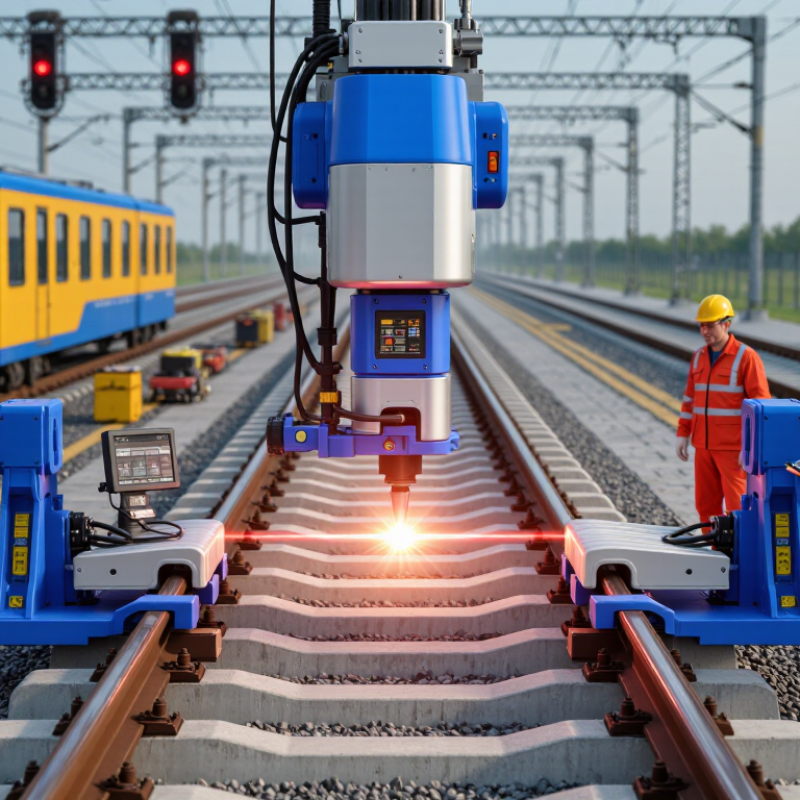
China Top Rail Joint Welding Machine Manufacturers
Rail Joint Welding Machines: Purpose and Basic Operating Principles
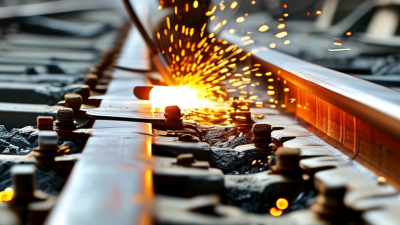
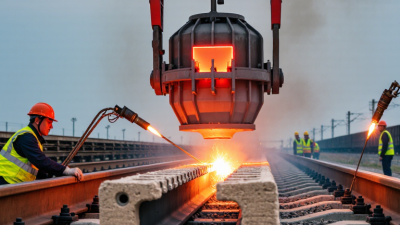
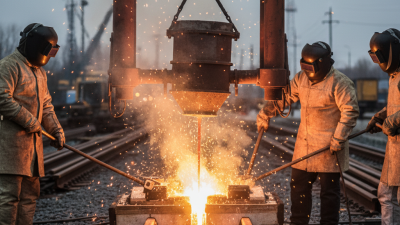
Rail joints connect rail ends into a continuous, load-bearing track. A welding machine aligns the rail, applies controlled heat and pressure, and forms a bond designed to withstand repeated wheel impacts and vibration. Common processes include flash-butt welding, which uses electrical resistance heating, and thermite welding, which uses a chemical reaction to produce molten steel. The choice depends on site access, production needs, and the required quality controls. UIC’s Railway Statistics 2023 reports roughly 1.05 million route-kilometres of railway worldwide, underscoring the scale of track systems that require dependable joints.
In flash-butt welding, clamps hold the rail ends in alignment. Electric current heats the contact area; the machine then presses the ends together, expelling molten material and forming the joint. Operators inspect alignment and remove excess metal after welding. Settings must suit rail section, material, and equipment. A neat-looking bead alone does not prove a sound weld. Inspection and process records matter.
Tips: Keep rail ends clean and correctly aligned before welding. Confirm machine calibration, then follow the approved procedure for the specific rail grade. Small errors can matter. A practical limitation is that field conditions—wind, moisture, or restricted access—can complicate consistent results, so operators should not treat one set of settings as universal.
| Dimension | Rail Joint Welding Machine | Purpose and Basic Operating Principle | Typical Applications and Considerations |
|---|---|---|---|
| Primary purpose | Joins rail ends to create a continuous welded rail or to repair a rail section. | Produces a metallurgical connection between prepared rail ends. The joint is finished to meet the required rail profile and alignment. | Used in new track construction, track renewal, and certain rail-repair operations. The welding procedure must be suitable for the rail grade and track requirements. |
| Flash-butt welding | Mechanized resistance welding process, commonly performed with a purpose-built rail welding machine. | Electrical current heats the rail ends as they are brought together. Flashing at the interface heats and cleans the surfaces; the ends are then upset under force to form the weld. | Can be used in fixed facilities or with mobile equipment on track. Equipment typically includes a power system, clamping and alignment assemblies, and a controlled upsetting mechanism. |
| Thermite welding | Field welding process that uses a refractory mould and a chemical reaction to supply molten steel. | A measured charge reacts in a crucible; molten metal flows into the mould around the rail ends and forms the joint as it solidifies. | Often used for field closures and locations where a mobile flash-butt machine is impractical. Mould preparation, preheating, reaction control, and finishing are essential process steps. |
| Rail-end preparation | Preparation step required before welding. | Rail ends are cut or trimmed as required, cleaned, and checked for damage, contamination, and correct geometry. | Accurate preparation supports proper alignment and reduces the risk of defects. The exact procedure depends on the welding method and applicable railway specifications. |
| Alignment and clamping | Positioning functions integrated into, or used alongside, welding equipment. | Clamps hold the rail ends in the required relative position while the process is performed. Alignment controls help manage vertical and lateral offsets. | Alignment is checked before welding and rechecked during finishing. Track geometry requirements determine the acceptance limits. |
| Process control | Monitoring and control of the welding sequence. | Depending on the method, control may cover current, heating or flashing time, force, displacement, or the sequence of thermite-welding operations. | Recorded process data and inspection records can support quality assurance and traceability. Parameters are set according to approved procedures rather than a universal value. |
| Post-weld finishing | Removal of excess material and restoration of the rail-head profile. | Flash or surplus weld metal is removed as appropriate, followed by grinding and profile checks. | Finishing helps provide a smooth running surface and suitable rail-head geometry. Inspection methods and acceptance criteria are defined by the relevant railway standards or owner requirements. |
| Inspection and testing | Verification that the completed joint meets specified requirements. | Visual and dimensional checks are commonly used; nondestructive testing may be required by the applicable inspection plan. | Inspection can identify surface or internal discontinuities and confirm joint geometry. Requirements vary by railway authority, rail grade, and application. |
| Safety considerations | Controls for electrical, mechanical, thermal, and hot-metal hazards. | Operators follow the equipment instructions and approved work procedures, use appropriate protective equipment, and secure the work area. | Work planning should address track access, electrical isolation where applicable, fire prevention, hot surfaces, moving components, and safe handling of consumables. |