How to Choose Welding Rail for Global Buyers?
Choosing Welding Rail for international projects requires more than comparing prices. Rail profiles, steel grades, welding methods, and operating conditions must match precisely. A suitable product should support reliable joints, stable geometry, and long service life under repeated loads.
Global buyers should examine technical documents before requesting quotations. Check rail section dimensions, chemical composition, tensile strength, hardness, and applicable standards such as EN, ASTM, or regional railway specifications. Confirm whether the Welding Rail suits flash-butt, thermite, or another approved welding process. Compatibility matters. A perfect-looking rail can still fail during installation if the welding procedure is unsuitable.
Supplier experience also deserves close attention. Ask for mill certificates, batch traceability, inspection records, and clear tolerances. Review examples from similar climates, traffic volumes, and track designs. Salt air, freezing temperatures, heavy axle loads, and frequent braking can expose weak material choices. Packaging is practical, too. Rails need firm supports, protected surfaces, and accurate marking during long-distance transport.
Do not trust claims alone.
A lower quotation may hide testing gaps, inconsistent chemistry, or costly rework. I have found that small documentation details often reveal a supplier’s real discipline. Still, no checklist is perfect. Buyers should involve qualified rail engineers and arrange independent inspection when project risks are high. The best decision balances verified quality, delivery capability, lifecycle cost, and responsive technical support. This approach helps global buyers select Welding Rail with greater confidence, while leaving room to question assumptions before production begins.
What Welding Rail Is and Where It Is Used
How to Choose Welding Rail for Global Buyers?
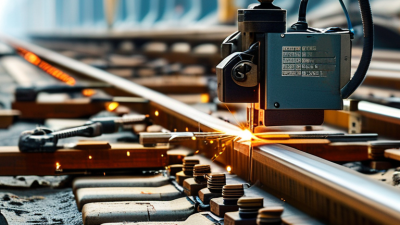
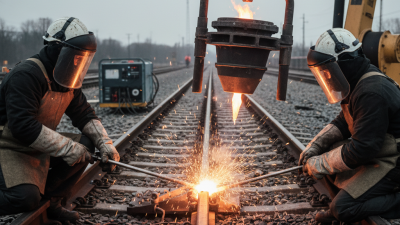
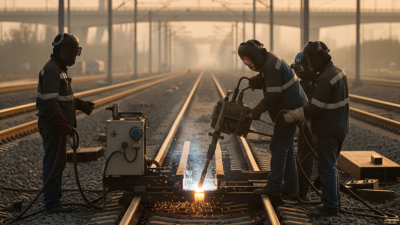
Welding rail is rail steel joined into long, continuous sections through controlled welding. It reduces wheel impact at rail joints and supports smoother train movement. Common methods include flash-butt welding and aluminothermic welding. Each method suits different conditions, equipment, and maintenance plans.
Welded rail is widely used on high-speed lines, metro systems, heavy-haul routes, and freight corridors. It also appears in station approaches, bridges, tunnels, and sharply curved sections. In field inspections, engineers often check weld alignment, surface defects, hardness, and residual stress. Ultrasonic testing can reveal internal flaws that visual checks may miss. Small surface marks matter.
For global buyers, rail grade, profile, length, and welding method must match the track design. Local temperature changes also influence rail expansion and stress management. A rail suitable for a cold inland route may perform differently in a hot coastal area. That assumption needs testing. Buyers should request material certificates, welding procedures, inspection records, and traceability data. These documents support reliable quality decisions.
Weld quality is never only a factory issue. Installation skill, grinding accuracy, transport damage, and site inspection all affect service life. Some buyers focus heavily on price and overlook maintenance access. That can become expensive later. Clear technical drawings and acceptance criteria reduce misunderstandings between suppliers, contractors, and railway operators. A practical trial section may reveal problems before full delivery.
How to Choose Welding Rail for Global Buyers?
What Welding Rail Is and Where It Is Used
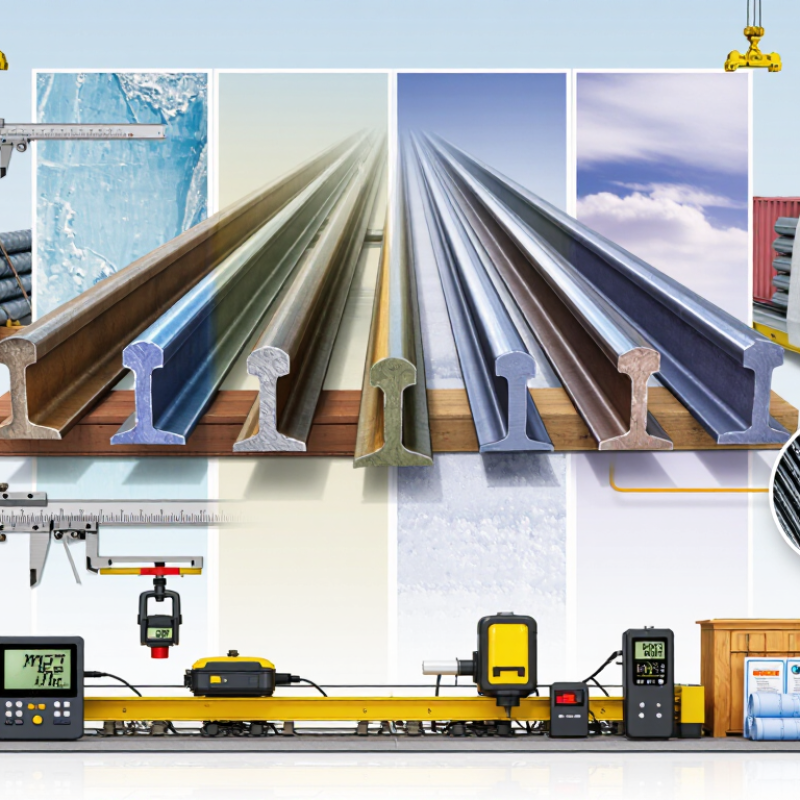
Welding rail is rail assembled into long continuous lengths by processes such as flash-butt welding or thermite welding. The profiles shown are widely used standard rail sections, and their nominal mass is a practical indicator of load capacity, track structure, and application. Heavier rail is commonly selected for high axle loads, heavy-haul routes, and main lines, while lighter profiles are often used for lower-load routes, urban rail, and sidings. Final selection should also consider rail profile standards, steel grade, axle load, traffic density, curvature, and the applicable railway authority requirements.
Key Rail Types and Standards for Different Welding Systems
Choosing welding rail starts with the welding system, not only the rail price. UIC Railway Statistics 2023 records more than one million route-kilometres worldwide. That scale creates different maintenance conditions. Flat-bottom rail suits most mainline tracks. Grooved rail fits embedded urban routes and requires EN 14811 compliance. Crane rail needs separate dimensional control under EN 13674-3. Catalogue matching is not enough.
For flash-butt welding, buyers should verify rail grade, cross-section, end squareness, and machine capacity. EN 13674-1 commonly covers grades such as R260 and R350HT. North American projects may specify 900A, 1000, or 1100 rail under AREMA requirements. Aluminothermic welding is more flexible on site, but it needs approved weld kits, accurate moulds, preheating, and strict cooling control. EN 14730-1 provides relevant qualification requirements. Small errors become visible later.
The UNIFE World Rail Market Study 2024 estimates the annual accessible rail supply market at approximately €200 billion. Buyers should therefore request traceable heat numbers, ultrasonic inspection records, tensile results, and hardness profiles. A higher hardness grade can improve wear resistance, yet it may complicate welding procedures and heat control. I still regard hardness alone as incomplete evidence. Local axle loads, curves, climate, and maintenance equipment can change the best choice. A rail that performs well in a dry heavy-haul corridor may behave differently in a wet urban tunnel.
How to Match Rail Size, Grade, and Surface Requirements
How to Choose Welding Rail for Global Buyers?
Selecting welding rail starts with the operating environment, not a catalog number. Track gauge, axle loads, train speed, and curve radius determine the required rail section. A heavy freight route may need a larger profile and higher head hardness than a light urban line. Check the rail height, foot width, web thickness, and weight per meter against the approved drawing. Small dimensional differences can affect welding alignment.
Grade selection requires more than tensile strength. Review chemical composition, hardness range, toughness, and wear resistance together. Carbon and alloy content influence weldability and heat-affected zones. Ask for mill certificates, heat numbers, and test results from an accredited laboratory. These records help confirm traceability. They also reveal gaps.
Surface quality deserves a practical inspection. Rails should be free from dangerous cracks, seams, peeling, deep rust, and transport damage. Measure straightness along the full length, especially near rail ends. End squareness matters during flash-butt or aluminothermic welding. Ultrasonic testing can identify internal discontinuities that visual checks miss. Protect the rail with suitable packing and moisture control during shipment.
A specification should state the governing railway standard, rail length, tolerance, grade, surface limits, testing method, and acceptance procedure. Global projects often combine local regulations with purchaser requirements. That combination can create ambiguity. Clarify it before production. A sample inspection may cost time, but replacing mismatched rail costs far more. Even experienced buyers sometimes focus on grade and overlook surface condition. That mistake is easy to make.
How to Evaluate Suppliers, Certifications, and Global Compliance
How to Choose Welding Rail for Global Buyers?
When evaluating welding rail suppliers, begin with evidence, not polished brochures. Request the product standard, certificate number, issuing body, and validity period. ISO 9001 shows a quality system, but it does not prove rail performance. The rail must match the required specification, such as EN 13674-1, ASTM requirements, or another recognized regional standard. Confirm the exact grade, profile, length, and welding process. Details matter.
Ask for mill test certificates linked to each heat number. Check chemical composition, tensile strength, hardness, and ultrasonic inspection results. Traceability should continue from billet production to final shipment. A reliable supplier can explain how defects are recorded and corrected.
During a factory audit, inspect rail storage, welding equipment, calibration labels, and sample records. Small gaps can reveal larger problems. Documents are not enough.
Global compliance also includes packaging, labeling, customs documents, and destination-country requirements. Verify whether certificates are accepted by the buyer’s authority, not merely issued by a local office. Independent laboratory testing may be necessary for unfamiliar suppliers or critical rail projects. Be careful with unusually low prices; they may reflect weaker inspection or incomplete documentation. Even experienced buyers can overvalue certificates and underestimate production consistency. A supplier’s response to difficult questions often provides more evidence than its sales presentation.