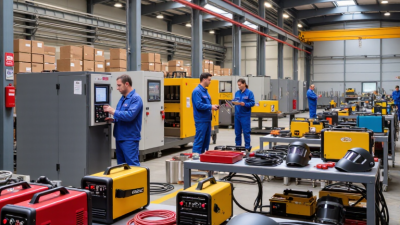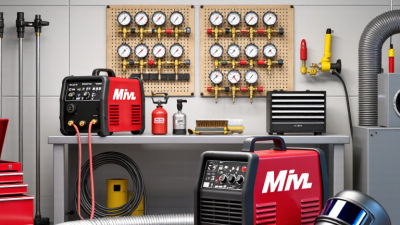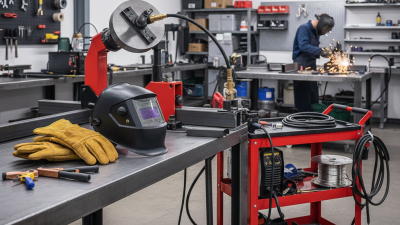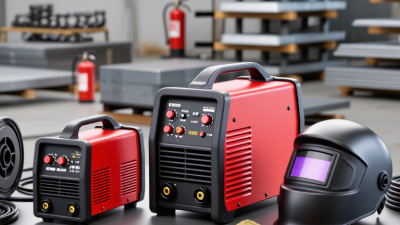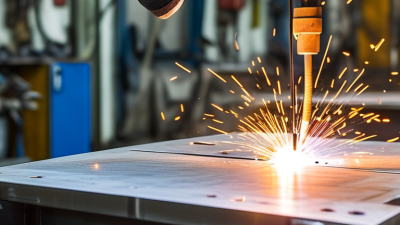
Tool Welding Equipment is used to join, repair, shape, and protect metal tools under demanding working conditions. Its applications include die repair, mold refurbishment, cutting-edge restoration, hardfacing, fixture fabrication, and precision maintenance. A damaged carbide insert, for example, may require controlled heat rather than replacement. The wrong setting can distort a tool within seconds.
Professional reports show why this equipment matters. The U.S. Bureau of Labor Statistics projects about 45,800 annual openings for welders, cutters, solderers, and brazers from 2023 to 2033. The International Institute of Welding also identifies welding as a critical manufacturing technology across transportation, energy, construction, and machinery. Market studies from Grand View Research and MarketsandMarkets report continued growth in global welding-equipment demand, driven by automation, repair work, and advanced materials. Their figures differ because market definitions vary. That limitation deserves attention.
John C. Lippold, a respected welding-metallurgy author and educator, emphasizes a practical principle: “Weld quality depends on controlling heat, metallurgy, and joint design.” That idea explains the role of modern Tool Welding Equipment. Power sources, torches, electrodes, clamps, positioners, and monitoring systems must work together. Operators also need experience. A machine cannot fully correct poor preparation, contamination, or an unsuitable filler metal.
This article examines what Tool Welding Equipment is used for, how different systems support toolmaking, and where each method performs best. It also considers safety, repeatability, heat-affected zones, and operating cost. The answer is not simply “joining metal.” In real workshops, it is controlled problem-solving. Some choices remain imperfect. Performance depends on tool material, geometry, production volume, and the operator’s judgment.
What Is Tool Welding Equipment Used For?
Tool Welding Equipment: Definition, Scope, and Core Components
Tool welding equipment includes portable machines and supporting tools that join metal through heat, pressure, or both. It serves repair shops, fabrication floors, construction sites, and maintenance teams. Typical equipment includes a power source, welding torch, electrode holder, cables, clamps, shielding-gas controls, and cooling systems. Each part affects arc stability, joint strength, and operator control.
The scope is wider than the welding machine itself. Preparation tools remove rust and create clean edges. Positioners hold parts at workable angles. Measuring devices check alignment before heat changes the metal. A 2024 Fortune Business Insights analysis estimated the global welding equipment market at more than USD 16 billion. The report also identified automation and energy efficiency as major growth factors. These figures show demand, but market forecasts can miss workshop-level realities. A compact inverter may be efficient, yet it cannot replace correct material preparation.
Tips: Match the power source to metal thickness and process. Inspect cables before every shift. Keep the work clamp close to the joint. Use ventilation and suitable protective equipment. Record voltage, current, wire speed, and travel speed for repeatable results. The International Labour Organization reports that welding fumes can contain hazardous substances, so local extraction matters. My practical mistake was treating fume control as an accessory. It is part of the equipment scope. Calibration records and operator training deserve equal attention.

Welding equipment joins metal parts, repairs worn edges, and builds strong industrial assemblies. Its current range changes with the welding process, material thickness, electrode size, and joint position.
Shielded metal arc welding commonly operates between 40 and 300 amperes. Small repair electrodes may run near 60 amperes, while heavy structural electrodes need much higher output. Gas metal arc welding typically uses 50 to 400 amperes, supporting fast work on steel, stainless steel, and aluminum. Flux-cored arc welding often operates from 100 to 500 amperes, especially on thicker plate and outdoor structures. These ranges align with process tables in the American Welding Society’s Welding Handbook, 10th edition.
Gas tungsten arc welding can work from about 5 to 350 amperes. Its low-current control helps weld thin sheet, tubing, and precision components. Submerged arc welding usually requires 200 to 2,000 amperes, depending on wire diameter, plate thickness, and deposition targets. European Welding Federation guidance also stresses that current must match voltage, travel speed, and shielding conditions. More current is not automatically better.
In a workshop, a technician may set 85 amperes for a thin stainless tube, then increase output above 250 amperes for structural plate. Real jobs are less tidy. Poor grounding, long cable runs, or contaminated steel can distort the expected result. Operators should verify settings through qualified procedures, test welds, and inspection records.
What Is Tool Welding Equipment Used For?
Tool welding equipment helps technicians repair, join, and rebuild metal components with controlled heat and filler metal. In a repair bay, it can restore worn dies, cracked housings, damaged shafts, cutting edges, and machine fixtures. TIG welding suits thin sections and precise repairs. MIG and stick processes handle thicker parts and demanding workshop conditions. The correct process depends on alloy, joint design, heat sensitivity, and the required finish.
The American Welding Society’s 2023 workforce report projected a need for about 330,000 new welding professionals in the United States by 2028. This demand reflects more than new fabrication. Maintenance teams also need skilled workers who can extend equipment life instead of replacing complete assemblies. The U.S. Bureau of Labor Statistics reported roughly 47,000 annual openings for welders, cutters, solderers, and brazers during its 2023–2033 projection period. Still, repair work is not automatically efficient. A visible bead may hide porosity, distortion, or an overheated base metal. Experienced technicians must inspect beyond appearance.
Tips: Clean the joint to bright metal. Confirm alloy and hardness before welding. Preheat when the material requires it. Use short passes on heat-sensitive parts. Record amperage, filler type, and final inspection results. Small records prevent repeated mistakes. A second inspection is often worth the delay.
Tool welders use different welding processes to join cracked parts, repair worn edges, and rebuild missing metal on dies, molds, shafts, cutting tools, and machine components. The chart shows the typical suitability of each process for common repair tasks on a relative scale from 1 to 5, based on standard process capabilities rather than market-share data.
What Is Tool Welding Equipment Used For?
Safety Controls Based on OSHA and ANSI Welding Requirements
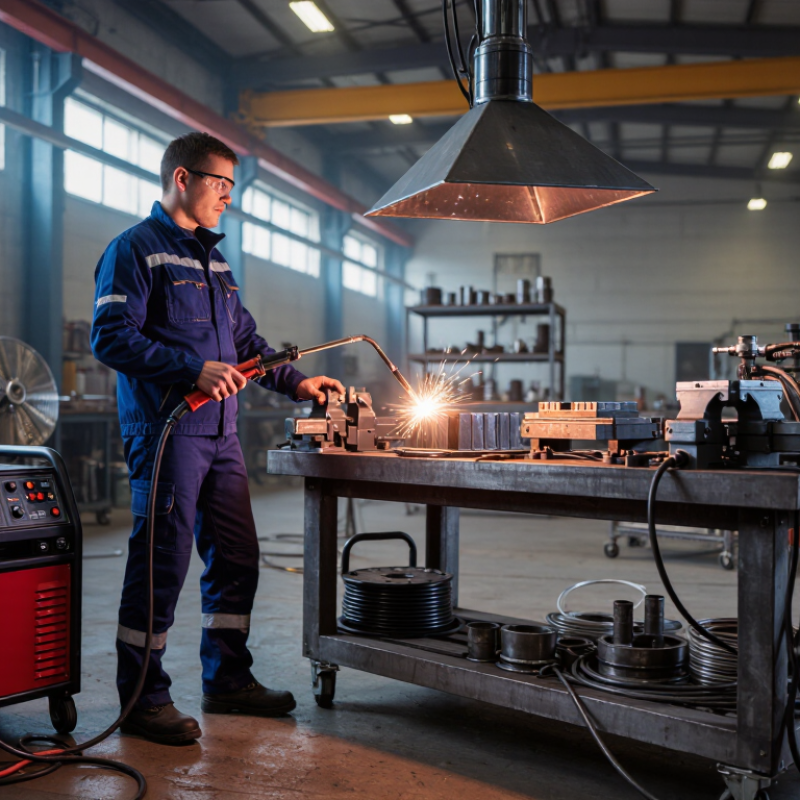
Tool welding equipment supports cutting, joining, positioning, and inspecting metal during fabrication and repair work. Typical tools include electrode holders, welding leads, ground clamps, chipping hammers, wire brushes, screens, and ventilation equipment. Each tool should match the welding process and the work environment.
Safety controls begin with a documented hazard assessment. OSHA requirements address electrical protection, fire prevention, ventilation, compressed gases, and personal protective equipment. ANSI Z49.1 also provides practical guidance for safe welding and cutting operations. Workers should inspect leads for damaged insulation, keep connections tight, and place cables away from hot surfaces and walkways. Grounding must be secure. A loose clamp can create heat, sparks, or an unexpected shock path.
Keep flammable materials outside the hot-work area whenever possible. Use suitable screens to protect nearby workers from arc radiation and flying sparks. Local exhaust should capture fumes near the source, not merely move them across the room. Respiratory protection may be needed after exposure evaluation, but it does not replace ventilation. Small details matter. Clean lenses improve visibility. Dry gloves improve control.
Training should cover equipment setup, emergency shutdown, cylinder handling, and confined-space risks. Supervisors need to verify that controls remain effective during changing work conditions. No checklist is perfect. In real shops, cluttered cables and rushed inspections still cause preventable mistakes. Reviewing near misses can reveal weak controls before an injury occurs. Requirements may vary by location, so qualified safety personnel should confirm the applicable rules.
| Equipment or Control | Primary Use | Key Safety Requirement | Practical Control or Inspection Point | Reference |
|---|---|---|---|---|
| Welding power source | Provides controlled welding current for arc-welding processes. | Equipment must be installed and operated to prevent electric shock, overheating, and accidental energizing. | Inspect the enclosure, controls, grounding path, cables, and ventilation openings before use. Remove damaged equipment from service. | OSHA 29 CFR 1910.252(a); ANSI Z49.1 |
| Electrode holder and welding leads | Transfers welding current between the power source, electrode, and workpiece. | Live parts must be protected from unintended contact, and cables must be suitable for the welding duty. | Check insulation, connectors, strain relief, and holder jaws. Do not use leads with exposed conductors, loose connections, or severe cuts. | OSHA 29 CFR 1910.254; ANSI Z49.1 |
| Work-return clamp and connection | Completes the welding circuit through the workpiece. | The return connection should be mechanically secure and electrically adequate for the welding current. | Attach the clamp directly to clean metal when practicable. Do not use building steel, chains, hoists, or pipelines as an improvised return path. | OSHA 29 CFR 1910.254; ANSI Z49.1 |
| Welding helmet and filter lens | Protects the eyes and face from ultraviolet radiation, infrared radiation, visible light, sparks, and spatter. | Use a filter shade appropriate to the welding process and operating current; use impact-rated protective components. | For common arc-welding ranges, minimum OSHA shade examples include shade 7 below 60 A for several processes, shade 10 at 60–250 A for GMAW/FCAW, and shade 11 at 250–500 A for SMAW. Select the correct table entry for the process and current. | OSHA 29 CFR 1910.133(a)(5), Table E-1; ANSI Z87.1; ANSI Z49.1 |
| Safety glasses with side protection | Protects against flying particles during setup, chipping, grinding, and cleaning. | Eye protection is required where there is a reasonable probability of eye injury from particles, chips, or sparks. | Wear under the welding helmet and during non-arc tasks such as slag removal and grinding. Replace scratched or damaged lenses. | OSHA 29 CFR 1910.133; ANSI Z87.1 |
| Welding gloves and protective clothing | Reduces burns from heat, molten metal, sparks, and ultraviolet exposure. | Clothing must be flame-resistant and appropriate for the process; cuffs, pockets, and exposed skin should not collect sparks. | Use dry, insulated gloves in good condition. Wear long sleeves, full-length trousers, and closed, nonconductive footwear. Do not wear synthetic fabrics that can melt. | OSHA 29 CFR 1910.252(b); ANSI Z49.1 |
| Local exhaust ventilation | Captures welding fumes and gases near the source before they enter the breathing zone. | Adequate ventilation is required to control hazardous fumes, gases, and heat; respiratory protection may be needed when ventilation is insufficient. | Position the hood close to the arc without obstructing the work. Verify airflow, keep filters maintained, and never use oxygen for ventilation. | OSHA 29 CFR 1910.252(c); ANSI Z49.1 |
| Respiratory protection | Controls inhalation exposure when engineering and work-practice controls cannot adequately protect employees. | A written respiratory protection program, medical evaluation, fit testing, training, and appropriate respirator selection are required when respirators are used. | Use exposure monitoring and hazard assessment to select protection. Tight-fitting respirators require fit testing and clean-shaven sealing surfaces. | OSHA 29 CFR 1910.134; ANSI Z49.1 |
| Portable welding screens and curtains | Shields nearby workers from arc radiation, sparks, and spatter. | Adjacent workers must be protected from harmful rays and hot particles without restricting required ventilation. | Place screens around the work area, maintain safe clearance from hot work, and use welding-rated materials rather than ordinary plastic sheeting. | OSHA 29 CFR 1910.252(b); ANSI Z49.1 |
| Fire prevention and extinguishing equipment | Prevents and responds to ignition caused by sparks, slag, and radiant heat. | Remove or shield combustible materials. Provide suitable fire extinguishing equipment and a fire watch when conditions require it. | Inspect the area before work, protect openings and opposite sides of metal surfaces, and monitor for smoldering after hot work where fire hazards remain. | OSHA 29 CFR 1910.252(a); ANSI Z49.1 |
| Compressed-gas cylinders and regulators | Stores and regulates shielding gases and fuel gases used in welding and cutting. | Cylinders must be secured, protected from damage, handled carefully, and kept away from excessive heat and incompatible materials. | Keep cylinders upright and secured against falling, close valves when not in use, replace valve caps when required, and inspect hoses and regulators for leaks. | OSHA 29 CFR 1910.253; ANSI Z49.1 |
| Hot-work inspection and authorization | Confirms that the work area, equipment, materials, and personnel are ready before welding begins. | Hazards must be evaluated before work, especially near combustible construction, containers, coatings, and confined spaces. | Document the job hazard assessment, verify permits where required, identify coatings and contents, and stop work if conditions change. | OSHA 29 CFR 1910.252(a); ANSI Z49.1 |
| Training, labels, and safety data | Ensures workers understand equipment operation, chemical hazards, PPE, and emergency procedures. | Employees must receive hazard communication and task-specific training for welding equipment, consumables, gases, and coatings. | Keep labels and safety data sheets available, train workers before assignment, and refresh training when processes or hazards change. | OSHA 29 CFR 1910.1200; ANSI Z49.1 |
Note: OSHA requirements are legally enforceable in covered workplaces. ANSI Z49.1 provides consensus safety guidance; employers should verify the edition adopted by applicable regulations, contracts, or workplace procedures.
Tool welding equipment holds, aligns, positions, and supports parts during welding. It helps maintain joint accuracy while heat changes the workpiece. Common tools include clamps, fixtures, positioners, backing bars, and specialized torches. Selection should begin with the material, not the equipment catalog.
Aluminum conducts heat quickly, so fixtures need stable support and controlled clamping. Stainless steel may distort, requiring low-contact fixtures and careful heat management. Carbon steel usually tolerates heavier tooling, but excessive restraint can still cause cracking. Butt joints need accurate edge alignment, while fillet and lap joints need clear torch access. Pipe joints often require rotating equipment or adjustable positioning.
Production duty cycle also changes the decision. Occasional repair work may need manually adjusted tooling with moderate thermal resistance. Continuous production demands durable fixtures, repeatable stops, protected contact surfaces, and cooling where necessary. Check the rated load, operating temperature, adjustment range, and maintenance access before installation. Small details matter.
A fixture can look rigid yet flex under repeated heat. The first setup is rarely perfect. In shop trials, operators should inspect bead placement, distortion, clamp marks, and repositioning time. If parts shift after several cycles, the problem may involve heat expansion rather than poor welding technique. Recording these observations makes later equipment choices more reliable.