China’s exothermic welding industry serves railways, power systems, grounding projects, and industrial construction. This guide introduces China’s top 10 Exothermic Welding Mold Manufacturers through practical, verifiable criteria. The focus includes mold quality, production experience, material selection, customization, and export reliability.
A dependable Exothermic Weldig Mold should withstand repeated high-temperature reactions without cracking or losing its shape. Manufacturers should provide clear product specifications, inspection records, and suitable graphite grades. Their molds may support cable-to-cable, cable-to-rod, and grounding-grid connections. Real project experience matters. A clean mold cavity, accurate fitting, and stable clamping can directly affect connection quality.
Details reveal capability.
This overview does not treat factory size as the only sign of professionalism. It considers technical support, sample approval, packaging, delivery consistency, and after-sales communication. Certifications can add confidence, but buyers should verify their validity and scope. Product photographs alone cannot prove long-term performance. Independent testing and project references remain valuable.
The ranking should be viewed as a practical market reference, not an absolute verdict. Manufacturer capabilities can change with equipment, staff, and quality controls. Some information may also require direct confirmation. That limitation deserves attention. Buyers should compare drawings, copper conductor sizes, reaction charges, mold life, and operating instructions before placing an order. A careful review helps engineers select reliable suppliers for safe, durable, and compliant exothermic welding applications.
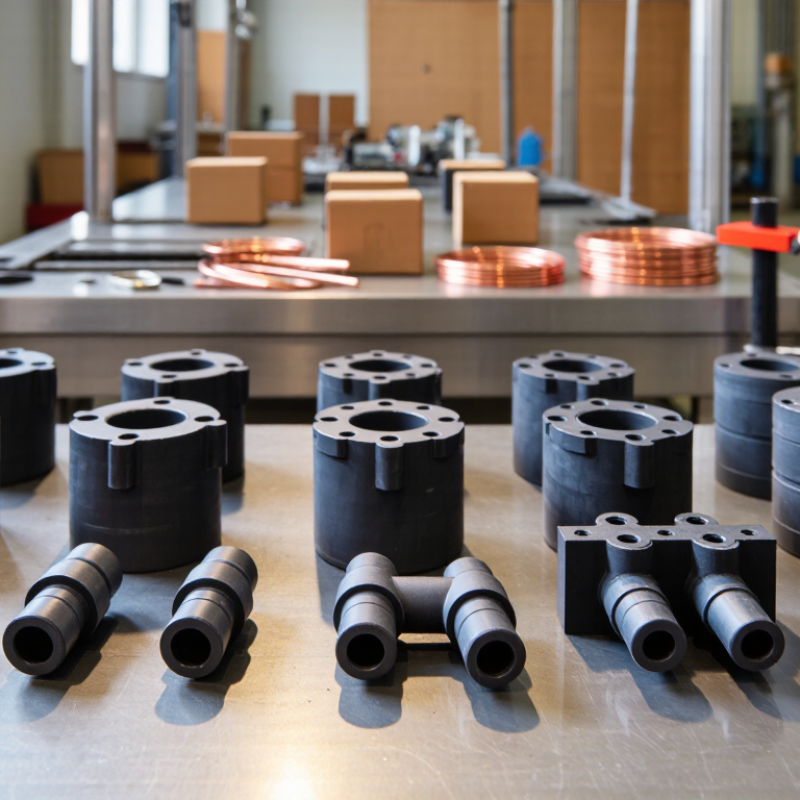
Exothermic welding molds are heat-resistant forms used to join conductors permanently. Most are made from dense graphite, which tolerates the brief, intense heat of the reaction. The mold holds cables, rods, or steel components in a precise position. Its internal cavity shapes the finished connection.
The working process is straightforward but not careless. Clean conductors are placed inside the mold and aligned with the joining cavity. A measured welding charge sits in a small crucible above them. After ignition, the charge produces molten metal through a controlled chemical reaction. The liquid metal flows into the cavity and surrounds the conductors. It then cools into a solid electrical and mechanical joint. No external power source is required.
Dryness matters greatly. Moisture can create steam and disturb the weld. Experienced installers inspect the mold for cracks, worn edges, and blocked passages before use. They also remove oxidation and dirt from the conductors. A poor fit may leave gaps, weak bonding, or visible leakage. The process looks simple, but field conditions are less forgiving than diagrams suggest. Heat, wind, awkward access, and incorrect cable positioning can change the result. I would not treat a clean appearance as proof of quality. The completed joint still needs visual inspection, dimensional checks, and electrical testing by trained personnel. Small details decide reliability.
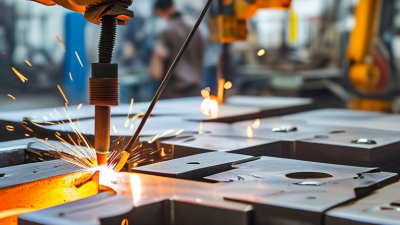
Evaluating Chinese exothermic welding mold manufacturers requires more than comparing catalog prices. The mold must resist thermal shock and maintain accurate cavity geometry during repeated welds. Ask for technical drawings, graphite grades, machining tolerances, and expected service cycles. Material evidence matters. Request batch records, hardness data, and dimensional inspection reports before approving samples. Experienced manufacturers should explain how mold design matches conductor size, joint type, and welding powder.
Factory capability deserves direct verification. Check whether production uses CNC machining, controlled graphite processing, and calibrated measuring tools. A sample order can reveal surface finish, cavity alignment, closing fit, and marking quality. Ask how rejected pieces are separated from approved stock. Clear answers indicate stronger process control. Vague answers deserve caution.
Quality management should include traceable batch numbers, inspection checkpoints, and protective packaging. Confirm communication speed, drawing revision control, and replacement procedures for damaged or incorrect molds. An on-site audit is useful, but remote video checks can expose basic weaknesses too. A polished website is not proof. One practical mistake is trusting a low quotation before checking graphite density and repeatability. I have seen specifications look complete while omitting mold lifespan. That gap needs honest discussion. Supplier references, test photographs, and independent inspection can improve confidence, although no single document proves consistent performance.
China Top 10 Exothermic Welding Mold Manufacturers
Profiles of China’s Top 10 Exothermic Welding Mold Manufacturers
China’s leading exothermic welding mold manufacturers serve grounding, railway, power, and construction projects. Their profiles differ in machining depth, mold materials, and quality controls. The top ten should be assessed through repeatability, not factory size alone. Grand View Research valued the global electrical equipment market at over USD 1.7 trillion in 2023, supporting demand for dependable grounding components. However, public data on exothermic welding molds remains limited. This makes supplier verification essential.
Several Chinese manufacturers focus on graphite mold machining for copper-to-copper and cable-to-steel connections. Others offer customized cavities, clamps, handles, and ignition accessories. Stronger profiles usually show dimensional inspection records, batch traceability, and practical field experience. ISO 9001 certification can support reliability, but it cannot replace weld testing. UL Solutions and IEC guidance both emphasize verified electrical continuity and mechanical integrity in grounding systems. A polished catalog is not enough.
Tips: Request sample weld records, cavity drawings, graphite density data, and temperature-resistance details. Confirm whether the mold survives repeated field cycles. Ask for independent test evidence. Also inspect packaging, because chipped graphite can change the joint shape. One weakness remains: many supplier profiles rely on translated claims instead of measurable results. Buyers should compare actual test photographs, tolerances, delivery records, and technical responses before selecting among China’s top ten manufacturers.
Reference conductor sizes commonly encountered in grounding and bonding applications supported by exothermic welding molds.
The chart uses nominal copper conductor cross-sectional areas recognized in IEC 60228. These are technical reference dimensions for mold selection and are not company-specific production or sales figures.
China Top 10 Exothermic Welding Mold Manufacturers
Product Quality, Customization, and Manufacturing Standards
When evaluating China’s top 10 exothermic welding mold manufacturers, product quality should lead the comparison. A mold must hold conductor alignment under intense heat. Its cavity should produce clean, repeatable welds with limited flashing. Field inspection experience shows that small dimensional errors can create weak contact points. Reliable manufacturers usually apply ISO 9001:2015 controls, incoming graphite inspection, cavity measurement, and batch traceability. The IEA’s Electricity 2024 report forecasts global electricity demand will grow by about 4% annually through 2026. That expansion increases pressure for dependable grounding connections and consistent production.
Customization also matters. A professional manufacturer should adapt mold cavities to conductor size, cable geometry, connection type, and installation conditions. Useful evidence includes dimensional drawings, material certificates, sample testing, and controlled revision records. IEEE Std 837-2014 provides guidance for qualifying permanent connections used in electrical substations. However, compliance language alone is not enough. Buyers should request test methods, temperature-cycle results, and practical installation feedback. Some specifications look impressive but remain poorly explained.
Tips: Ask for a first-article sample. Check cavity fit with the actual conductor. Confirm graphite grade and service life. Review traceability records before ordering. Do not treat customization as unlimited; unusual designs may need field validation. A perfect-looking mold can still perform inconsistently when storage, moisture, or operator technique is ignored. Manufacturers should state these limitations clearly.
Selecting a Chinese exothermic welding mold manufacturer requires more than comparing prices. The IEA’s Electricity Grids and Secure Energy Transitions report says annual grid investment must exceed 600 billion dollars by 2030. That forecast signals sustained demand for reliable grounding and bonding components.
Start with metallurgy. Ask for copper-alloy certificates, hardness ranges, dimensional drawings, and heat-cycle records for each mold design. A capable supplier should explain conductor sizes, joint applications, weld-metal capacity, and service limits. Request samples. Inspect cavity finish, clamp fit, handle safety, and mold markings under ordinary site conditions. Photographs help, but destructive test results provide stronger evidence. Ask for independent laboratory reports when project risk is high.
For a shortlist of ten manufacturers, score quality, repeatability, delivery, documentation, and technical support separately. ISO 9001 certification helps, but it does not prove every mold performs correctly. This is often missed. Require lot traceability, calibration records, incoming inspection rules, and corrective-action reports. The World Bank’s Logistics Performance Index 2023 shows that logistics reliability varies across markets, so delivery promises need evidence. Use a pilot order with witnessed trials and a written acceptance checklist. Do not accept vague claims such as “premium quality.” One successful weld cannot validate a production batch. A factory visit may reveal mold cleaning practices, graphite handling, and operator training. Choose the supplier that documents limitations clearly, not merely the one offering the lowest quotation.
| Rank | Anonymous Manufacturer Profile | Primary Mold Type | Typical Connection Applications | Mold Material Options | Customization Capability | Key Quality Checks to Request | Typical Production Lead-Time Range | Best-Fit Project |
|---|---|---|---|---|---|---|---|---|
| 1 | Profile A — High-volume industrial supplier | Reusable graphite mold systems | Copper-to-copper, copper-to-steel, grounding conductors | Graphite; optional steel storage fixtures | High; cavity and conductor dimensions can normally be adapted | Dimensional report, graphite density, cavity inspection, sample weld photos | Approximately 2–5 weeks after drawing approval | Large infrastructure and repeat orders |
| 2 | Profile B — Custom-design specialist | Made-to-drawing graphite molds | Rail bonding, power distribution, earthing connections | Machined graphite selected for thermal resistance | Very high; suitable for non-standard conductor geometry | Engineering drawing review, tolerance report, fit-up sample, traceability records | Approximately 3–6 weeks for first articles | Projects requiring special joint configurations |
| 3 | Profile C — Grounding-system focused supplier | Cable and ground-rod mold assemblies | Ground rods, copper tape, stranded copper cable | Graphite with replaceable alignment components | Medium to high; optimized for common grounding layouts | Conductor fit, rod diameter compatibility, clamp alignment, weld continuity test | Approximately 1–4 weeks for standard designs | Commercial, utility, and lightning-protection grounding |
| 4 | Profile D — Export-oriented OEM supplier | OEM graphite molds with accessory kits | Cable-to-cable and cable-to-steel connections | Graphite; optional clamps, handles, and storage cases | High; packaging and accessory configuration can be specified | Pre-shipment inspection, packaging test, material declaration, export documents | Approximately 3–6 weeks including export preparation | International distributors and private-label procurement |
| 5 | Profile E — Small-batch engineering supplier | Prototype and low-volume graphite molds | Testing, maintenance, retrofit, and repair work | Standard and fine-grain graphite grades | High; economical for one-off or low-volume requirements | Prototype dimensional inspection, trial assembly, defect review, revision control | Approximately 2–5 weeks depending on complexity | Pilot projects and replacement molds |
| 6 | Profile F — Electrical-utility supply specialist | Heavy-duty exothermic welding molds | Substations, transmission grounding, cable terminations | Dense graphite designed for repeated thermal cycling | Medium; usually focused on established joint designs | Thermal-cycle evidence, cavity wear inspection, electrical continuity, batch records | Approximately 3–7 weeks for engineered orders | Utility and high-reliability grounding projects |
| 7 | Profile G — Standard-catalog supplier | Catalog graphite molds | Common copper conductor and ground-wire joints | Standard machined graphite | Limited; best suited to established dimensions | Catalog dimensional accuracy, cavity condition, compatibility chart, incoming inspection | Approximately 1–3 weeks when stock is available | Routine maintenance and urgent replacement needs |
| 8 | Profile H — Precision-machining supplier | Tight-tolerance graphite mold components | Precision cable joints and compact connection layouts | Fine-grain graphite with precision-machined surfaces | Very high; suitable where alignment is critical | Coordinate measurement, surface inspection, cavity concentricity, trial-weld verification | Approximately 4–8 weeks for precision tooling | Specialized assemblies with strict dimensional control |
| 9 | Profile I — Cost-focused production supplier | Economical standard and semi-custom molds | General construction grounding and cable connections | Commercial-grade graphite | Medium; customization depends on order quantity | Incoming material inspection, cavity dimensions, sample-weld acceptance, packaging check | Approximately 2–5 weeks for standard quantities | Price-sensitive projects with common joint designs |
| 10 | Profile J — Project-support supplier | Mold, tooling, and application-support packages | Mixed conductor sizes and field installation programs | Graphite molds with compatible positioning tools | High; support may include drawings and installation guidance | Installation instructions, sample approval, operator training records, corrective-action process | Approximately 3–7 weeks for complete project packages | Projects needing technical assistance and multiple mold sizes |
Note: The profiles are intentionally anonymized. Lead times and capabilities are typical procurement ranges rather than guaranteed manufacturer claims; confirm material grade, tolerances, testing records, applicable standards, minimum order quantity, warranty terms, and sample-weld acceptance before purchase.