Leave Your Message

Why Choose Aluminothermic Welding for Railways?

Why Choose Aluminothermic Welding for Railways?

Railways need durable joints where long rails meet, especially beside stations, bridges, and remote track sections. Aluminothermic Welding uses a controlled thermite reaction to produce molten steel on site. The metal fills a prepared rail gap and forms a continuous connection. No large power supply is required. That practical advantage matters across extensive networks. The International Union of Railways reported more than one million route-kilometres worldwide in its Railway Statistics publications. Even small welding failures can create costly delays, rough running, and repeated maintenance.

Professor John F. Lancaster, a respected welding-metallurgy authority, wrote, “Welding is both a science and an art.” His observation fits rail welding closely. Successful work depends on chemistry, temperature, alignment, operator experience, and inspection discipline. European standard EN 14730-1 specifies approval requirements for aluminothermic welding processes and welders. Network Rail standards also emphasize controlled preparation, welding execution, finishing, and verification. The details are not optional.

The method is not magic. A poor rail gap, weak preheating, or careless grinding can leave visible and hidden defects. Field teams must check the rail ends, mould condition, reaction timing, weld profile, and final geometry. Reports from infrastructure managers show why quality systems matter, although comparing failure statistics across countries remains difficult. This article examines the practical reasons railways continue choosing Aluminothermic Welding, while recognizing its limits, training demands, and dependence on disciplined field work.
Why Choose Aluminothermic Welding for Railways?

What Is Aluminothermic Welding in Railway Construction?

In railway construction, aluminothermic welding joins two rail ends without a large stationary machine.

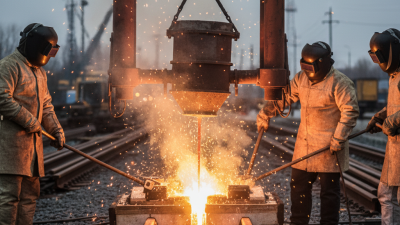
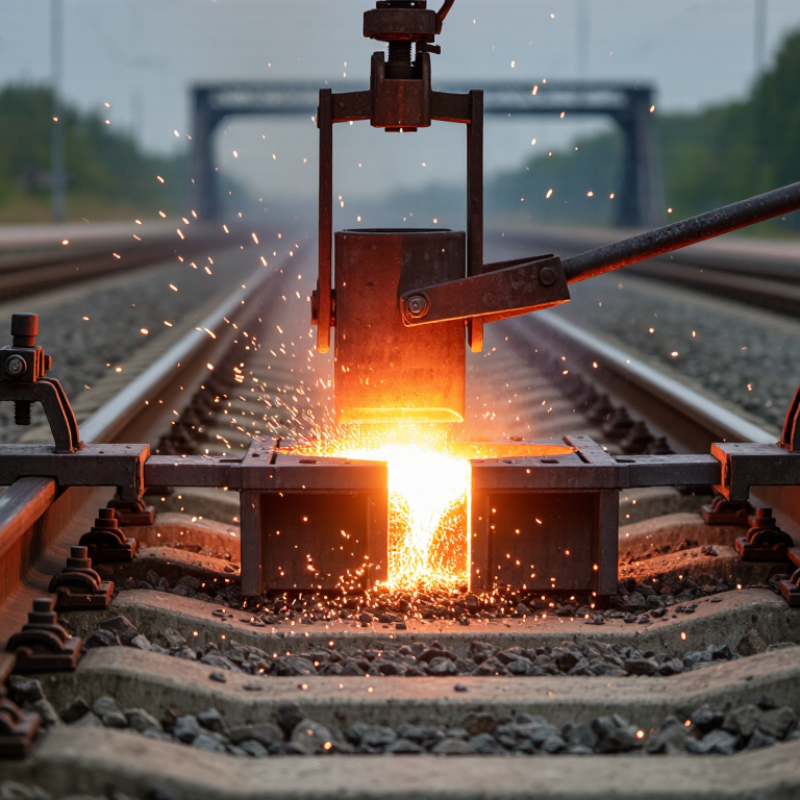
A controlled thermite reaction produces molten steel from metal oxide and aluminum powder. The heat is intense. The molten metal flows into a refractory mold around the rail gap. As it cools, it forms a continuous joint. This process is also called thermite rail welding.

Technicians first cut and clean the rail ends, then set the gap precisely.

They align the rail head, web, and foot with careful gauges. A preheating step removes moisture and prepares the surfaces. This detail matters. Moisture or poor alignment can create pores, inclusions, or a hard transition. The charge is ignited under controlled site procedures. After solidification, excess metal is removed and the profile is ground to match the rail.

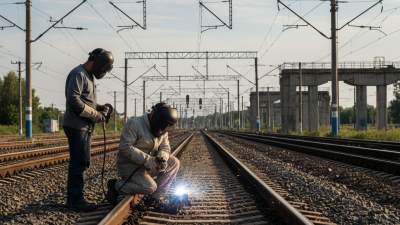
The method suits track repairs and remote construction sites because its equipment is comparatively portable.

It can restore long rail sections with limited access to electricity. However, it is not a shortcut. Temperature, timing, mold condition, and operator skill influence weld quality. Inspectors may use visual checks, dimensional measurements, and approved non-destructive testing. A bright surface can mislead; hidden defects may remain. I would not call every field weld perfect. Track geometry, service loads, and local procedures still deserve careful review.
How Does the Aluminothermic Rail Welding Process Work?

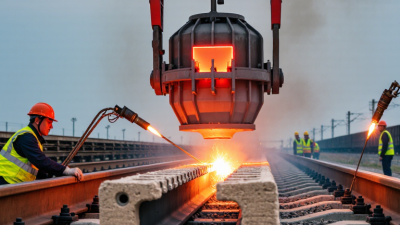
Aluminothermic welding joins rail sections without bringing them to a workshop. Technicians align the rail ends, leave a controlled gap, and secure a refractory mold around the joint. They then preheat the rail faces to remove moisture and support proper fusion. Small errors matter here.

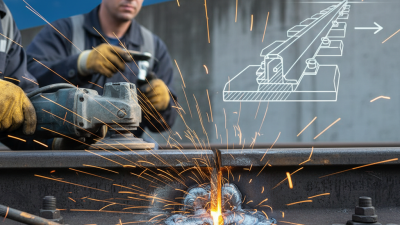
A reaction between aluminum powder and iron oxide produces intense heat and molten steel. The liquid metal flows into the mold and fills the gap between the rails. After cooling, workers remove the mold, trim excess metal, and grind the weld profile. The finished surface must match the rail head closely, because uneven metal can affect wheel contact and ride quality. Experienced teams also inspect the weld visually and measure its geometry. Ultrasonic testing may reveal internal flaws that surface checks cannot detect. The process is practical, but it is not forgiving.

Tips: Keep the rail ends clean, dry, and correctly aligned. Follow approved heating times and pour procedures. Never judge quality by appearance alone. Record temperatures, joint measurements, and inspection results. In field conditions, wind and rain can disturb heating, so crews should pause when conditions become unreliable. Even trained workers can miss a small alignment fault. That possibility deserves careful review before traffic returns.

Why Choose Aluminothermic Welding for Railways?

How Does the Aluminothermic Rail Welding Process Work?

Aluminothermic rail welding uses a thermite reaction in which aluminum reduces iron oxide to produce molten steel and aluminum oxide. The molten steel fills a prepared rail gap, then solidifies to form a continuous rail joint.

The chart shows typical field-time ranges for a single rail weld. Actual durations vary with rail section, weather, welding procedure, and the required finishing quality. The process is widely used because it is portable, does not require an external power supply, and is suitable for field repairs and isolated track locations.

Which Materials and Equipment Are Used?

Why Choose Aluminothermic Welding for Railways?

Aluminothermic welding uses a controlled thermite reaction to join rail ends in the field. The charge contains iron oxide, aluminium powder, and carefully selected alloying materials. The reaction creates molten steel at roughly 2,500°C. This steel fills a refractory mould shaped to the rail profile.

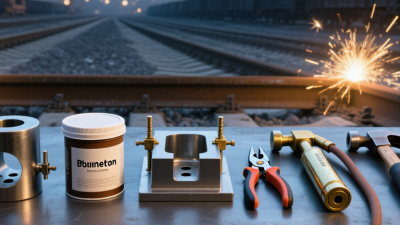
The equipment is practical but precise. Teams need a rail alignment clamp, preheating torch, ceramic mould, sealing paste, ignition device, cutting tools, and a rail grinder. Temperature crayons or infrared tools help confirm suitable preheating. Personal protective equipment is essential. EN 14730-1 covers approval and quality requirements for rail welds, including procedure control and testing. Field experience shows that poor alignment can create visible surface defects after grinding. Small errors matter.

Tips: Clean rust, oil, and moisture from both rail ends. Check the rail gap before heating. Use a mould matched to the rail section. Do not rush cooling or grinding. A rushed finish can hide internal problems.

The International Energy Agency reports that rail carries about 8% of global passenger activity and 7% of freight activity, while using around 2% of transport energy. Reliable welded track supports that efficiency. However, the process is not effortless. Wind, rain, uneven heating, and operator judgment can affect results. Welding records should include rail grade, batch details, preheating time, ambient conditions, and inspection findings. That documentation feels tedious, but it protects repeatability.

What Are the Main Benefits for Railway Infrastructure?

Why Choose Aluminothermic Welding for Railways?

Railway infrastructure demands strong, continuous joints under vibration, weather changes, and repeated wheel loads. Aluminothermic welding creates a molten steel connection directly around prepared rail ends. It can produce durable field joints without bulky electrical equipment. This matters on remote tracks, tunnels, and routes with limited access. Crews can transport the equipment by hand and complete repairs during short maintenance windows. A properly executed weld also supports smooth wheel passage and reduces impact at the joint.

The method is not perfect. Poor rail alignment, damp moulds, or incorrect preheating can weaken the result. That limitation matters. Trained welders must follow approved procedures, measure rail gaps, and inspect the finished profile carefully. Visual checks, dimensional measurements, and suitable non-destructive testing improve reliability. In my experience, preparation often decides the outcome more than the reaction itself. Infrastructure managers should also consider traffic loads, rail chemistry, weather, and future grinding requirements before selecting this method.

Tips

Keep the rail ends clean and square. Protect consumables from moisture. Verify preheating with suitable instruments, not guesswork. Record each weld for maintenance history. Allow enough cooling time before opening the track. A rushed closure can create hidden defects, even when the surface looks acceptable. Regular inspection remains essential, especially on curves, switches, and heavily loaded routes.

What Limitations Should Railway Engineers Consider?

Why Choose Aluminothermic Welding for Railways?

What Limitations Should Railway Engineers Consider?

Aluminothermic welding suits remote track repairs because it needs no external power supply. Crews can carry the equipment beside the rail. However, the process depends heavily on preparation. Rail ends must be clean, aligned, and correctly gapped. Moisture, wind, or poor preheating can create hidden weld defects. Small errors matter.

EN 14730-1 and UIC 860-0 require controlled procedures, qualified welders, and post-weld inspection. These requirements add time beside live railway infrastructure. The weld also needs grinding, dimensional checks, and sometimes ultrasonic testing. A rushed repair can leave a hard inclusion, poor profile, or weak fusion zone. That risk is not theoretical. The U.S. Federal Railroad Administration’s 2023 safety database recorded more than 10,000 reportable railroad accidents and incidents, showing why one maintenance failure deserves serious attention.

Site conditions remain another limitation. A thermite charge cannot correct damaged rail geometry or unstable ballast. Engineers must also manage rail temperature, closure time, worker protection, and traffic reopening. Network Rail’s rail welding guidance stresses temperature control and inspection discipline, while RSSB research highlights the importance of reliable track-worker controls. The method is practical, but not forgiving. In my experience, teams sometimes overvalue speed and undervalue cooling time. That deserves review. Cost comparisons should include access, testing, rework, and possession delays, not only the welding kit.

Why Choose Aluminothermic Welding for Railways? - What Limitations Should Railway Engineers Consider?

Engineering Dimension What Aluminothermic Welding Offers Typical Technical Information Key Limitation or Control
Welding principle A thermite reaction produces molten steel, which is poured into a prepared mould around the rail ends. The reaction uses aluminium powder and iron oxide; aluminium removes oxygen from the oxide and generates heat and metallic iron. The process must be performed by trained personnel using an approved procedure and compatible consumables.
Site power requirement The weld does not require a high-current electrical welding machine at the track location. This is valuable in remote locations, on isolated tracks, and where transporting heavy electrical equipment is difficult. Lighting, rail cutting, grinding, heating, ventilation, and inspection equipment may still require power or fuel.
Mobility and access Portable equipment enables welding where a stationary flash-butt welding plant cannot be positioned. Commonly used for repairs, rail replacement, turnout work, and joining rails in constrained track areas. The work area still needs safe access, stable footing, clearance from traffic, and adequate space for moulds and finishing tools.
Typical work sequence Rail ends are cut and aligned, a mould is fitted, the joint is preheated, the charge is ignited, excess metal is removed, and the weld is ground. The sequence includes rail-gap setting, mould sealing, preheating, pouring, controlled cooling, trimming, and final profiling. Skipping or shortening a step can cause lack of fusion, inclusions, shrinkage cavities, porosity, or an incorrect rail profile.
Joint geometry A correctly executed weld can restore rail continuity and produce a running surface that is ground flush with the adjacent rail. Final geometry is controlled by accurate rail alignment, mould positioning, trimming, and rail-profile grinding. Poor alignment or insufficient grinding can create impact loads, noise, accelerated wear, and vehicle dynamic problems.
Thermal control The process can be carried out without heating the entire rail length; heat is concentrated at the joint. Preheating and cooling conditions are critical because the rail steel and weld metal must solidify with an acceptable microstructure. Wind, rain, low ambient temperature, moisture, or uncontrolled cooling can reduce weld quality and require additional protection.
Weather sensitivity The method remains practical outdoors when the weld zone is properly shielded and kept dry. Moulds, rail ends, consumables, and preheating equipment must be protected from water and excessive air movement. Wet consumables or a damp mould can introduce hydrogen or other defects; welding may need to be postponed in severe weather.
Rail preparation It can join rails after local removal of damaged or defective rail sections. Rail ends must be square, clean, free from oil and rust at the joint, and correctly positioned before mould installation. Existing battered ends, internal defects, contamination, or excessive rail movement can compromise the finished weld.
Mechanical performance A sound weld can provide continuous load transfer and a durable joint suitable for many main-line and yard applications. Performance depends on weld-metal chemistry, hardness, toughness, rail grade, heat treatment, alignment, and workmanship. The weld is a local metallurgical transition and may have different hardness or residual stresses from the parent rail.
Inspection requirements Visual inspection and rail-profile checks can be completed in the field, with additional non-destructive testing where required. Common controls include visual examination, dimensional checks, hardness assessment, ultrasonic testing, and periodic destructive testing for qualification or audit. Internal defects may not be visible; acceptance criteria must follow the applicable railway authority, infrastructure, or national standard.
Traffic possession The equipment is portable and can support repairs during planned maintenance windows. The possession must cover preparation, welding, cooling, trimming, grinding, inspection, and safe release of the track. The total occupation time may be longer than the visible pouring operation, especially when cooling and testing are mandatory.
Safety considerations It avoids electrical arc welding at the joint but provides a controlled method for producing molten metal in the field. Hazards include intense heat, molten metal, sparks, fumes, fire, hot tools, compressed gas, and movement of rail or equipment. A task-specific risk assessment, exclusion zone, fire protection, protective clothing, eye protection, and respiratory controls may be required.
Best-fit applications Well suited to isolated repairs, short rail replacements, turnouts, crossings, depots, and locations where mobile access is important. It is especially useful when transporting long continuous welded rail or large fixed welding equipment is impractical. For high-volume production welding, automated flash-butt welding may offer greater repeatability and process control where suitable equipment is available.
Engineering note: The figures and controls shown are representative industry considerations rather than acceptance limits. Final welding procedures, inspection methods, rail-temperature requirements, and qualification criteria should be taken from the applicable railway infrastructure standard and approved welding procedure.