Leave Your Message

2026 How to Choose Aluminothermic Welding Suppliers?

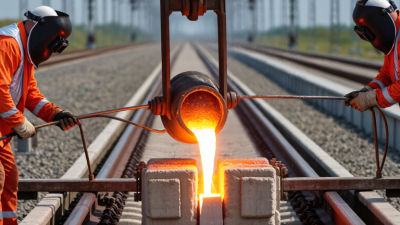
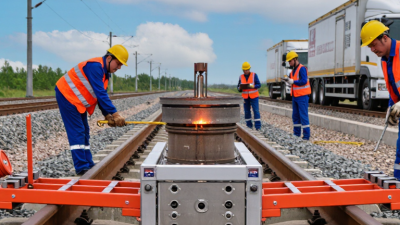
Choosing an Aluminothermic Welding supplier in 2026 is a quality decision, not just a price comparison. A defective joint can cause repeat work, service disruption, and costly inspections. Small details matter.

UIC’s Railway Statistics Synopsis 2024 describes a global railway network exceeding one million route-kilometres. That scale makes consistent welding procedures and traceable consumables important across very different operating conditions. The World Bank’s railway-sector guidance also emphasizes reliable infrastructure management over the asset life cycle. Buyers should therefore look beyond a supplier’s catalogue and ask how its process performs in the field.

Hans Goldschmidt, the chemist associated with developing the thermite process, offers relevant historical expertise. I cannot verify a verbatim quotation from him about modern rail-welding suppliers, so attributing one would be misleading. A fair paraphrase of the process lesson is: “Control the reaction, and control the result.” It is a useful reminder, not a documented quotation.

Ask suppliers for procedure qualifications, welder competence records, consumable batch traceability, and sample inspection reports. Check whether their equipment suits your rail profile, site access, weather, and production schedule. Request references for comparable projects. Demand proof. Not promises.

A low bid may omit training, technical support, or post-weld documentation. Compare those items before signing. Look for clear acceptance criteria and a practical response plan when a weld fails inspection. The strongest supplier is not automatically the largest. It is the one that can show repeatable results, explain its limits, and support your team on site.

2026 How to Choose Aluminothermic Welding Suppliers?

Define Rail Profile and Steel Grade Requirements Under EN 13674-1

2026 How to Choose Aluminothermic Welding Suppliers?

Define Rail Profile and Steel Grade Requirements Under EN 13674-1

A welding supplier needs the exact rail profile, not just the track gauge. EN 13674-1 specifies rail profiles, dimensions, tolerances, and steel grades for relevant Vignole rails. Include the profile designation, such as 60E1 or 54E1, in the enquiry. Small mismatch, big consequence. A mould designed for one section may not fit another rail’s head, web, or foot correctly.

State the rail grade shown in the project specification and mill documentation. Grades such as R260, R260Mn, and R350HT have different material properties and cannot be treated as interchangeable. Ask suppliers to confirm that their welding process and consumables are suitable for the specified grade. Check the applicable EN 13674-1 edition and any project-specific requirements; assumptions here can become expensive. It is easy to focus on the welding kit and overlook the steel designation.

Provide clear documents before requesting a quotation: rail profile, grade, section length, and relevant certificates. Ask how the supplier verifies mould selection and welding procedure suitability for that combination. In practice, incomplete rail data often delays technical approval. A careful cross-check takes minutes, though it may still feel like paperwork.

Verify Welding Process Approval Against EN 14730-1

2026 How to Choose Aluminothermic Welding Suppliers?

Verify Welding Process Approval Against EN 14730-1

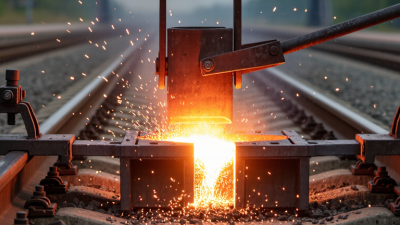
When comparing suppliers, ask for documented approval of the specific aluminothermic welding process under EN 14730-1. The standard concerns approval of rail welding processes; a general quality certificate does not establish that a particular process is approved. Check the document’s scope, applicable standard edition, rail profile and grade, and the process identification. Details matter. If these do not match your project, request clarification before accepting the supplier’s claim.

Ask for supporting records, not only a certificate image. Review the approval report and confirm that the proposed procedure corresponds to the approved process, including relevant setup and operating parameters. Ask how changes to consumables, equipment, or procedure are controlled, and who is responsible for checking the records at the site. A tidy PDF can look reassuring, but it may not show whether the approved configuration will actually be used. That distinction is easy to overlook. Keep traceable evidence linking the approved process to each weld, and agree in advance how deviations will be documented and reviewed.

2026 How to Choose Aluminothermic Welding Suppliers? — Verify Welding Process Approval Against EN 14730-1

Use this scope matrix to distinguish welding-process approval from the related personnel, contractor and weld-acceptance topics.

How to use: For process approval, ask the supplier for evidence applicable to EN 14730-1 and confirm that the approved process matches the rail and welding conditions in your project. The chart shows standard scope, not a supplier rating or certification status.

Check Welder Qualifications and Weld Acceptance Under EN 14730-2

When comparing aluminothermic welding suppliers, check people and procedures, not certificates alone. EN 14730-2:2021 covers welder qualification, contractor approval, and weld acceptance. Ask for current qualification records, traceable weld logs, and the inspection results required by your project specification. A qualified welder is essential. So is consistent field control.

The European Union Agency for Railways’ Railway Safety and Interoperability in the EU 2024 report recorded 1,567 significant railway accidents in 2023. These figures cover the wider rail network, not weld failures specifically; they underline why supplier claims should be backed by verifiable quality records. Request sample acceptance files showing visual checks, dimensional measurements, and any required testing. Confirm who signs off results and how rejected welds are recorded. A polished certificate can still hide uneven site practice.

Tips: Ask suppliers to walk you through one real weld record, from welder identification to acceptance decision. Compare it with EN 14730-2 and your project’s requirements. If a record is incomplete, treat that as a question to resolve—not proof of poor workmanship.

Confirm Compatibility With R260 and R350HT Rail Grades

When choosing an aluminothermic welding supplier, check that its procedures cover both R260 and R350HT rails. They are not interchangeable grades. R350HT has a head-hardened rail head, so its thermal response and required control measures may differ from R260. A supplier should identify the exact rail grade and profile before recommending a welding procedure. One setting for both deserves scrutiny.

Ask for grade-specific procedure qualification records, not just a general product sheet. Check whether the documents state the rail section, joint gap, preheating method, mould setup, and cooling instructions. These details affect the weld. Ask how the supplier controls temperature on site and what happens when wind, rain, or rail temperature changes the conditions. Small details matter.

Request evidence that completed welds are inspected using suitable methods, such as visual checks and specified hardness or other mechanical testing. The acceptance criteria should match the project requirements and applicable rail standards. Ask for traceable records linking each weld to its procedure, materials, and inspection results. A confident answer helps. A vague one does not. If R350HT requires a separate procedure or tighter controls, the supplier should explain why, rather than imply that one routine fits every rail grade.

Compare Batch Traceability, Field Support, Lead Times, and Warranty Terms

2026 How to Choose Aluminothermic Welding Suppliers?
Compare Batch Traceability, Field Support, Lead Times, and Warranty Terms

A dependable supplier should connect each welding kit to a traceable batch record. Ask for batch numbers, production dates, inspection results, and storage guidance. These details help teams investigate inconsistent preheating or weld quality later. Check that labels on delivered materials match the records. A spreadsheet can look complete while missing the one batch used on site. Verify a sample before approving a large order.

Tips: Request a sample traceability pack. Confirm who answers urgent field questions, and ask about support hours, response times, and available troubleshooting guidance. Get lead times in writing, including how the supplier handles delayed or split shipments.

Lead times matter most when work windows are fixed. Ask whether quoted dates cover production, packing, and delivery, not just dispatch. For field support, clarify whether advice is available by phone or requires a site visit. Warranty terms should name covered defects, claim deadlines, required evidence, and remedies. Keep delivery records and photographs of packaging. I have seen teams overlook these basics when schedules get tight. Supplier promises may sound clear, but vague wording can leave room for disagreement. Compare the documents, not only the sales conversation.

2026 How to Choose Aluminothermic Welding Suppliers? - Compare Batch Traceability, Field Support, Lead Times, and Warranty Terms

Use this scorecard to compare supplier quotations. Enter each supplier’s quoted facts and verify them against documents; lead times, support coverage, and warranty terms vary by product, location, and contract.

Comparison dimension Information to compare Evidence to request Evaluation guide
Batch traceability Batch or lot identification for welding portions, moulds, crucibles, and other supplied consumables, as applicable. Sample label and certificate or inspection record; explanation of how lot numbers link to dispatch documents and production records. Prefer records that identify the supplied item and lot clearly and can be retrieved for the project. Confirm which products are covered; do not assume every consumable has the same documentation.
Process and product suitability Compatibility with the rail or steel section, joint configuration, site conditions, and the customer’s approved welding procedure. Product specifications, applicable procedure documents, and project-specific confirmation of the proposed consumable and equipment combination. Check against the project specification and governing railway or engineering requirements. A general product brochure alone does not establish approval for a particular project.
Field support Support available at the work location, including technical response, troubleshooting, and any on-site training or supervision included in the quotation. Written service scope, service area, contact and escalation route, operating hours, response commitment, travel charges, and training deliverables. Compare commitments in writing, including what is excluded and whether support is remote or on-site. Avoid treating an informal availability statement as a guaranteed response time.
Lead time and delivery Quoted production or dispatch time, transit time, delivery location, order quantity, and any stated stock availability. Dated quotation; requested and confirmed delivery dates; Incoterms® rule and named place, where applicable; shipment schedule and delay-notification process. Compare like-for-like quantities and delivery terms. Separate manufacturing, handling, and transit time; record the actual committed date rather than relying on a general estimate.
Warranty terms Warranty period, start date, covered products or defects, remedy, claim deadline, and exclusions. Full written warranty and applicable sales terms, including required records, inspection steps, and responsibility for return or replacement costs. Compare the actual wording, not just the stated duration. Check whether installation, storage, handling, or use outside the supplied procedure affects coverage.
Quality and inspection records Quality controls and records relevant to the quoted products and the customer’s acceptance requirements. Relevant quality-system certificate, inspection or test documentation, document revision details, and a sample shipment record where available. Verify scope, issuing body, validity, and product relevance. A management-system certificate is not, by itself, proof that a specific shipment meets project acceptance criteria.
Training and documentation Instructions, safety information, training availability, language, and document access for the supplied process. Current manuals and safety data sheets where applicable; training agenda, delivery format, and confirmation of included or additional costs. Confirm documents match the quoted product and revision. Define who is responsible for worker qualification and project-specific approvals.
Commercial clarity Itemized price, minimum order, packaging, payment terms, quote validity, taxes, freight, and replacement or cancellation conditions. Itemized quotation and written terms that identify included services, excluded charges, and any conditions that change the price. Compare total delivered cost and equivalent scope. Resolve unclear charges and contractual conflicts before placing an order.

Comparison note: Populate the scorecard using current quotations and project requirements. Do not treat example evaluation guidance as a supplier claim, universal warranty standard, or guaranteed lead time.