Why Choose Aluminothermic Welding?
Modern railways demand durable joints, predictable geometry, and efficient maintenance. The UIC Railway Statistics 2023 illustrates the scale of global rail operations, with networks carrying millions of passengers and tonnes of freight each year. Every joint therefore affects safety, ride quality, and service reliability. Small errors matter.
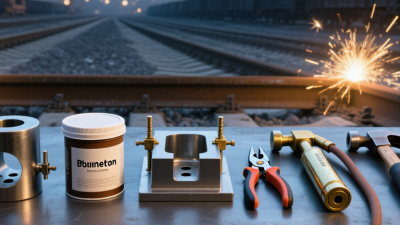
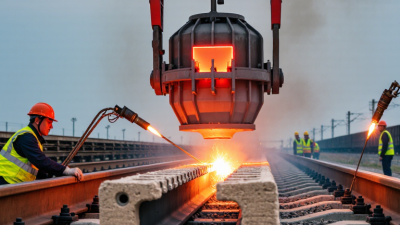
Network Rail’s Annual Report and Accounts 2023–24 describes a network exceeding 20,000 route miles, where track renewal must often occur within narrow maintenance windows. Aluminothermic Welding offers a practical field solution because it creates a continuous rail joint without requiring a large electrical power supply. The process uses a controlled thermite reaction, a prefabricated mould, preheating, and molten steel. Crews can apply it in remote locations, including sections where heavy welding equipment is difficult to position. That flexibility can reduce logistical pressure and shorten possession periods.
However, convenience should not replace engineering discipline. EN 14730-1 and infrastructure-owner procedures require qualified personnel, approved consumables, accurate rail alignment, correct preheating, and detailed inspection. The Rail Safety and Standards Board has repeatedly emphasized competence, process control, and verification within railway maintenance systems. A bright weld is not automatically a reliable weld. In practice, poor trimming, contamination, uneven gaps, or insufficient cooling can create defects beneath an acceptable-looking surface. This is where experience becomes decisive. Aluminothermic Welding can deliver strong, economical joints, but it is not a shortcut. Its value depends on preparation, traceability, and honest post-weld assessment. Teams should also review local standards and site conditions before selecting the process.
How Aluminothermic Welding Works
Why Choose Aluminothermic Welding?
How Aluminothermic Welding Works
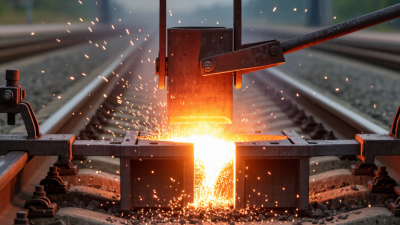
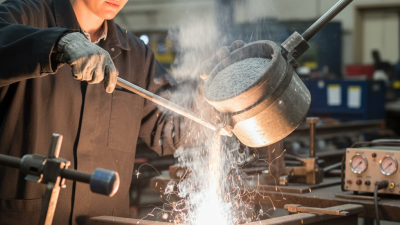
Aluminothermic welding joins steel rails and heavy sections using controlled chemical heat. It needs little external electrical power, making it practical in remote work areas. The process combines aluminum powder with a metal oxide. After ignition, aluminum removes oxygen from the oxide. This reaction produces molten steel and intense heat, often exceeding 2,000°C. It is a powerful chemical process.
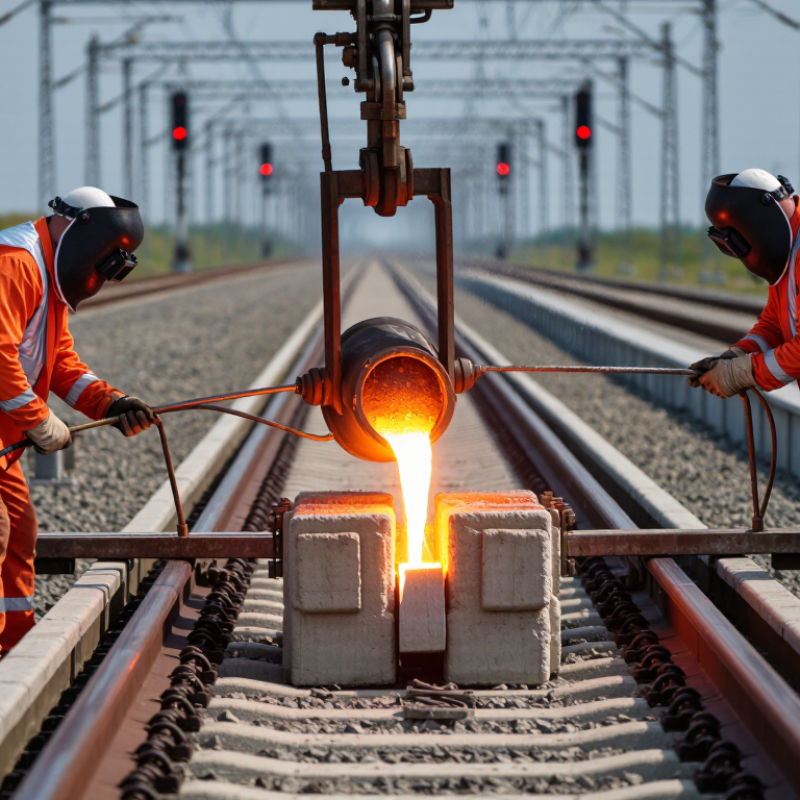
The work begins with accurate alignment and a carefully measured rail gap. Technicians clean the rail ends, secure a heat-resistant mold, and preheat the joint. Moisture must be removed. Even small contamination can weaken the result. The prepared charge is placed in a crucible and ignited. Molten steel then flows into the mold and fills the gap. Slag rises above the weld metal. After cooling, the mold is removed, and excess metal is trimmed.
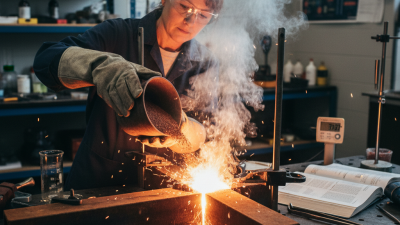
The weld requires more than a successful pour. Inspectors check its shape, alignment, surface condition, and hardness. Ultrasonic or other approved testing may reveal internal flaws. Field practice shows that temperature control and timing matter greatly. The method is reliable, but not automatic. Poor preheating, movement, or rushed finishing can create defects. A careful team follows qualified procedures and records each joint. Sometimes, the simplest-looking weld deserves the closest inspection.
Advantages for Rail and Heavy-Duty Applications
Why Choose Aluminothermic Welding?
Advantages for Rail and Heavy-Duty Applications
Rail networks carry demanding loads with little tolerance for weak joints. The IEA’s The Future of Rail reports that rail provides about 8% of global passenger transport activity and 7% of freight activity, while using only 2% of transport energy. That efficiency depends on reliable track geometry, continuous rails, and carefully controlled welds.
Aluminothermic welding is valuable where access is difficult. It needs no large electrical power supply, so crews can join rails beside remote lines, maintenance yards, and heavy-haul routes. A thermite reaction produces molten steel, which fills a prepared rail gap. The joint can then be trimmed, ground, and inspected on site. Fewer major machines can simplify possession planning.
The process is not automatically better. Poor alignment, damp moulds, incorrect preheating, or rushed finishing can create defects. EN 14730-1 requires approved welding procedures and qualified personnel for rail applications. In practice, that means checking rail ends, measuring the gap, controlling temperature, and recording inspection results. Small details matter. Very much.
For heavy-duty service, the main advantage is practical durability, not a magical absence of maintenance. Properly executed welds restore a continuous running surface and reduce the need for mechanical joint components. They also support smoother wheel contact under repeated axle loads. Still, field conditions can be unforgiving, and some welds deserve a second inspection after traffic resumes. That cautious step is easy to skip, yet it may protect long-term reliability.
Safety, Quality Control, and Technical Limitations
Why Choose Aluminothermic Welding?
Safety, Quality Control, and Technical Limitations
Aluminothermic welding suits rail repairs where electricity, heavy equipment, or workshop access is limited. Its reaction produces molten steel at extremely high temperatures. That advantage creates serious hazards. Operators must manage hot metal, preheating flames, fumes, and nearby combustible materials. No shortcut exists. The International Labour Organization’s 2023 global estimates report 2.93 million work-related deaths annually, including 2.6 million linked to occupational diseases. Welding safety therefore requires ventilation, face protection, heat-resistant clothing, and a controlled exclusion zone.
Quality depends on more than a clean-looking weld. Rail ends need accurate alignment, correct gap measurement, controlled preheating, and a suitable mold. EN 14730-2 emphasizes qualified personnel, approved procedures, and documented inspection. Visual inspection helps identify cracks, excess metal, and poor finishing. However, it cannot reliably reveal internal inclusions or incomplete fusion. Ultrasonic testing adds essential evidence, especially on heavily loaded routes. Records should include rail grade, batch details, weather, preheat readings, and finishing time. Small omissions can become large uncertainties.
Technical limitations deserve equal attention. Wind and rain can disturb preheating and contaminate the joint. Poor access may prevent accurate alignment. Different rail chemistries can change cooling behavior and hardness. Residual stress may also develop after rapid solidification. The method is less forgiving than factory welding. Experienced crews still make mistakes. That uncomfortable fact should influence training, inspection frequency, and acceptance decisions. When geometry, metallurgy, or site conditions fall outside the approved procedure, another joining method may be safer.
When Aluminothermic Welding Is the Right Choice
Aluminothermic welding is the right choice when a strong rail joint must be created away from a permanent workshop. The process uses a controlled thermite reaction to produce molten steel. It does not require a large electrical power source. This makes it useful for remote track repairs, renewal projects, and locations with limited equipment access.
Site conditions decide whether it works well. The rails must be correctly aligned, clean, and held at the specified gap. Technicians also need the correct mold, approved welding charge, accurate preheating, and enough cooling time. Small mistakes can leave visible defects or hidden weakness. It is not magic. It is disciplined field work.
The method suits repairs where mobility and dependable strength matter more than speed. It can also reduce the need to transport long rail sections through difficult terrain. However, it is not ideal for every joint. Tight quality tolerances, poor weather, damaged rail ends, or insufficient inspection can change the decision. A practical lesson is often overlooked: convenience should never replace preparation. Crews may choose aluminothermic welding because it seems simple, then spend more time correcting an avoidable problem. Careful visual inspection, dimensional checks, and suitable non-destructive testing help confirm the weld before the track returns to service.